
Simple Gratitude Practices to Boost Well-Being Every Day

TL;DR:
Gratitude is a skill that can be cultivated through simple, consistent practices.
Authentic, specific gratitude practice rewires the brain, reducing anxiety and enhancing well-being.
Rigid or superficial routines can undermine gratitude’s emotional and neural benefits.
Staying positive when life feels relentless is genuinely hard. Stress, uncertainty, and emotional fatigue can make even small joys feel out of reach. But here’s something worth knowing: gratitude isn’t a personality trait reserved for naturally optimistic people. It’s a skill you can build, one intentional moment at a time. Research consistently shows that structured gratitude practices reduce anxiety, strengthen emotional resilience, and even reshape how your brain processes everyday experiences. This article walks you through exactly what you need to get started, how to practice effectively, what pitfalls to avoid, and what real change looks like over time.
Table of Contents
Key Takeaways
Point | Details |
Start with simple tools | A notebook, open mindset, and consistent routine are all you need to begin practicing gratitude. |
Authenticity over perfection | Tailor your gratitude practice to your life for deeper, lasting benefits. |
Real health impacts | Practicing gratitude can reduce depression and anxiety by up to 35% and promote emotional resilience. |
Avoid common pitfalls | Balance gratitude with honesty to prevent toxic positivity and keep your practice meaningful. |
What you need to start practicing gratitude
Now that you see what’s possible with gratitude, let’s set you up for practical success. The good news is that starting doesn’t require expensive tools or a major lifestyle overhaul. What it does require is a little preparation and the right mindset.
First, choose your format. Common gratitude methods include journaling, verbal thanks, mindful reflection, and expressions through letters. Each has its own rhythm and appeal, so pick the one that feels most natural to you right now. A simple notebook works just as well as a dedicated app like Gratitude or Reflectly.
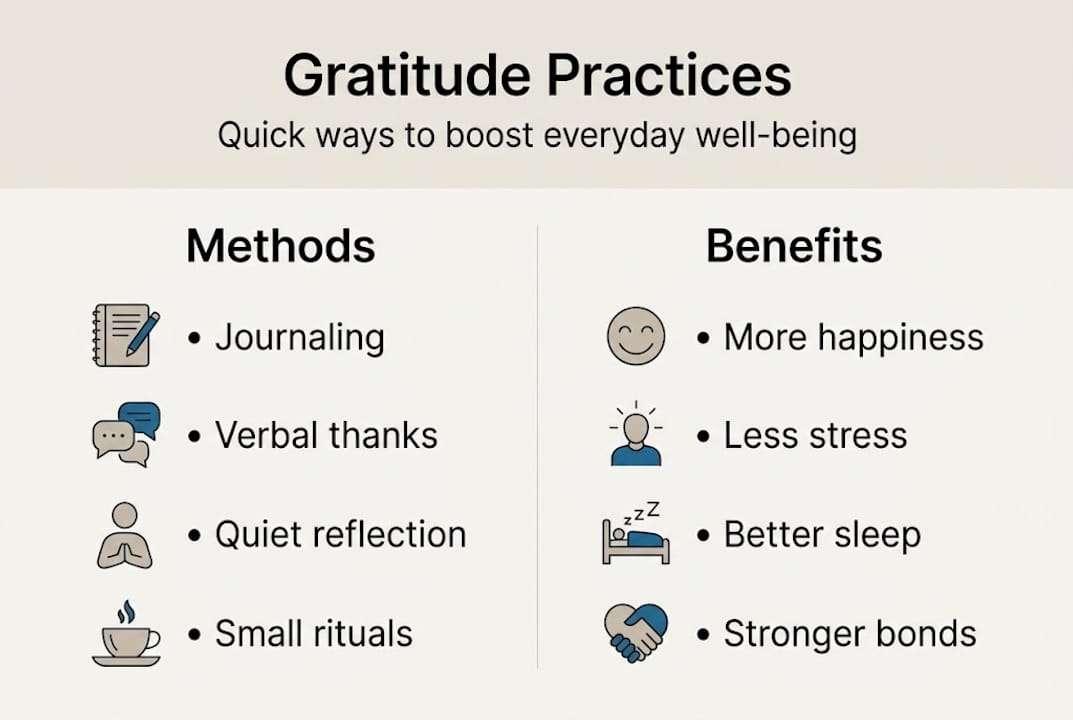
Next, commit to a realistic schedule. Two to three sessions per week, each lasting around 15 minutes, is enough to build momentum without feeling like a chore. Consistency matters more than frequency in the early stages.
What to have ready before your first session:
A journal, notebook, or gratitude app
A quiet space with minimal distractions
A short list of prompts (e.g., “What made today easier?” or “Who helped me this week?”)
An open mindset, meaning a willingness to be specific rather than generic
A set intention, such as improving mood, deepening relationships, or building resilience
The mindset piece is often underestimated. Vague gratitude like “I’m grateful for my family” loses its impact quickly. Specific gratitude like “I’m grateful my sister called to check in when I was overwhelmed” activates a much deeper emotional response. Specificity is where the real work happens.
Understanding the mindfulness benefits of present-moment awareness can also strengthen your gratitude practice, since both skills reinforce each other.
Format | Time needed | Best for |
Journaling | 10-15 min | Deep reflection |
Verbal thanks | 2-5 min | Quick daily habit |
Gratitude letter | 20-30 min | Relational healing |
Mindful reflection | 5-10 min | Stress relief |
Pro Tip: Stack your gratitude practice onto an existing habit, like writing three things you’re thankful for right after your morning coffee. This “habit stacking” approach dramatically improves consistency.
Step-by-step guide to core gratitude practices
With everything you need in place, here’s how to put gratitude into regular practice. The key is starting simple and building from there.
Start a gratitude journal. Each session, write 3 to 5 things you’re grateful for. Be specific and vary what you list each time so entries stay fresh and meaningful. Best practices suggest writing daily or weekly, depending on your schedule.
Add a reflection moment. After listing your items, spend two minutes sitting with one of them. Notice how it feels in your body. This is where neuroplasticity and gratitude begin to intersect, as repeated emotional focus gradually rewires neural pathways.
Practice verbal gratitude. Once a week, tell someone specifically what you appreciate about them. This isn’t small talk. It’s a deliberate act that strengthens social bonds and boosts both your mood and theirs.
Write a gratitude letter. Once a month, write a short letter to someone who positively impacted your life. You don’t have to send it, though doing so amplifies the well-being benefits significantly.
Use mindful breathing tips as a bridge. A few slow breaths before a gratitude session helps you move from reactive thinking into a more receptive state, making the practice feel more genuine.
Method | Emotional depth | Social impact | Time investment |
Expressive writing | High | Low | Medium |
Verbal thanks | Medium | High | Low |
Gratitude letter | Very high | Very high | High |
Mindful reflection | High | Low | Low |
Pro Tip: Rotate your methods across the week. Write on Monday, say something out loud on Wednesday, and reflect quietly on Friday. Variety keeps the practice alive and prevents it from feeling mechanical.
Adjusting frequency over time is also smart. As gratitude becomes more natural, you may find that three times a week feels effortless, or you may prefer a single longer weekly session. Both work. The goal is sustainable engagement, not perfect adherence.
Common mistakes (and how to avoid them)
While gratitude can be transformative, being aware of pitfalls keeps practices uplifting and genuine. Even well-intentioned routines can go sideways if you’re not paying attention.
Common missteps to watch for:
Going through the motions. Listing the same three things every day without feeling anything is a sign your practice has become robotic. Shake it up with new prompts.
Suppressing real emotions. Gratitude is not a replacement for processing pain, grief, or frustration. Forcing positivity over real feelings is a form of emotional avoidance.
Using gratitude as a comparison tool. Thinking “I should be grateful because others have it worse” invalidates your own experience and can breed guilt rather than growth.
Cultural mismatches. Some expressions of gratitude feel unnatural depending on cultural background. Adapt the format to fit your comfort zone.
Performative routines. Posting gratitude publicly every day for social approval can shift the motivation from internal growth to external validation.
Pitfalls like toxic positivity, weaponized gratitude, entitlement blocking gratitude, and performative routines are real risks that can undermine the practice entirely.
A critical note: If gratitude practice consistently makes you feel worse, more obligated, or emotionally numb, that’s a signal to pause and reassess. Genuine gratitude should feel expansive, not pressured. Practicing silence and self-awareness alongside gratitude can help you distinguish authentic appreciation from forced compliance.
A meta-analysis on gratitude confirms that the quality of gratitude practice matters far more than the quantity. Authentic, specific, and emotionally engaged gratitude produces meaningful results. Rote repetition does not.
The fix for most of these pitfalls is the same: slow down, get specific, and honor the full range of your emotional experience alongside the gratitude.
How gratitude changes your brain and well-being
With pitfalls in mind, see how genuine gratitude shapes health and happiness from the inside out. The science here is genuinely exciting.
When you practice gratitude, you activate the prefrontal cortex, the part of the brain responsible for decision-making and emotional regulation. At the same time, activity in the amygdala, your brain’s threat-detection center, tends to quiet down. The ripple effect of this shift is significant: less reactivity, more calm, and a greater sense of control over your emotional landscape.
Evidence-based benefits of regular gratitude practice:
Reduced symptoms of depression and anxiety by 25 to 35 percent
Improved sleep quality and duration
Stronger immune function
Greater relationship satisfaction
Increased sense of purpose and life meaning
Higher levels of positive emotions like joy, enthusiasm, and love
Gratitude interventions increase well-being, reduce depression and anxiety, and promote positive brain changes that accumulate over time. This is not a placebo effect. It’s measurable neural adaptation.
What makes this especially powerful is the upward spiral it creates. As you feel better, you notice more to be grateful for. As you notice more, your brain becomes more attuned to positive experiences. The mindfulness science behind attention training supports this same mechanism, which is why combining both practices amplifies results.
Authenticity is the engine here. Going through the motions without genuine emotional engagement produces far weaker results. When you truly feel the appreciation, the brain science shows that dopamine and serotonin pathways are activated, reinforcing the behavior and making it easier to repeat. For a broader look at how these practices connect to mental clarity, explore deeper mind insights on Life So Well.
Why authentic gratitude matters more than perfect routines
Beyond benefits and steps, here’s a perspective few articles share about gratitude’s real power. Most guides focus on building the habit. Fewer ask whether the habit is actually working for you.
Rigid gratitude protocols can quietly stifle the very benefits they promise. When practice becomes a checkbox, the emotional authenticity that drives real neural change disappears. We’ve seen this pattern repeatedly: people who journal every single day but feel nothing, versus people who write once a week with genuine feeling and report meaningful shifts in mood and perspective.
Research suggests that being specific and flexible, not rote, amplifies gratitude’s impact. That’s not just a research footnote. It’s the whole point.
The most powerful gratitude moments often arise from discomfort, not ease. Feeling grateful despite a hard day, or finding one small good thing inside a genuinely difficult experience, builds more resilience than cataloging blessings when life is already going well. That’s the real workout.
We encourage you to treat gratitude as a living practice that evolves with your circumstances. Some weeks, mindful gratitude will feel natural. Other weeks, it will feel forced. Both are valid. The goal is integration, not perfection.
Pro Tip: Let discomfort surface during your practice. Gratitude isn’t about ignoring pain. It’s about finding balance within it. Acknowledging what’s hard while also naming what’s good is a far more honest and effective approach.
Ready to make gratitude a core part of your well-being journey?
As you integrate gratitude, explore how Life So Well can help elevate your emotional growth. Building emotional resilience takes more than one practice, and you don’t have to figure it out alone.

Life So Well offers a growing library of resources on emotional resilience tools, mindfulness, social connection, and personal development. Whether you’re just starting out or looking to deepen an existing practice, you’ll find practical, evidence-informed guidance designed to meet you where you are. Gratitude is a powerful starting point, but it works best when it’s part of a broader commitment to your well-being. Explore what’s available and take the next step toward a more balanced, fulfilling life.
Frequently asked questions
How long does it take for gratitude practice to show results?
Most studies suggest that practicing consistently for 4 to 6 weeks leads to measurable improvements in mood, anxiety, and overall well-being.
Do I have to write in a journal to benefit from gratitude?
Not at all. Flexible methods like verbal thanks, quiet reflection, or small daily rituals can be just as effective as journaling when practiced with authenticity and consistency.
Can gratitude practice help with anxiety or depression?
Yes. Gratitude interventions have been shown to reduce depression and anxiety symptoms by 25 to 35 percent, according to large-scale research.
Is it possible to overdo gratitude practice?
Yes. Forced or repetitive gratitude can create a sense of obligation or emotional numbness. Authenticity and balance with your real emotional experience matter most.
Recommended


Comments