
Practical ways to show someone you love them effectively
Updated: Sep 21

Photo by: alllessandro, Pixabay
Small, consistent gestures tailored to emotional needs foster genuine love more than grand displays.
Authenticity, active listening, and regular check-ins strengthen emotional connection over time.
Mistakes are part of learning; prioritizing presence and honesty enhances relationship growth.
Most people want to express love in ways that truly land, but when the moment comes, they hesitate. Words feel inadequate. Gestures feel hollow. And the fear of getting it wrong can quietly stop you from showing up at all. The truth is, the most powerful expressions of love are rarely grand or expensive. They are small, consistent, and tuned to what your loved one actually needs. This guide walks you through understanding what makes love feel real, preparing yourself for meaningful expression, acting with intention, and confirming your impact along the way.
Table of Contents
Key Takeaways
Point | Details |
Personalize your gestures | Tailor your actions to fit the preferences of your loved one for meaningful impact. |
Consistency matters most | Small, thoughtful actions performed regularly make a lasting difference. |
Open communication is key | Talk with your loved one about what gestures resonate most to deepen your connection. |
Self-love enhances relationships | Caring for your own emotional well-being enables you to show genuine love to others. |
Understand what makes love meaningful
Before you can show love effectively, it helps to understand what love is actually doing beneath the surface. At its core, a loving gesture fulfills basic emotional needs: the need to feel seen, valued, safe, and connected. When someone receives care in a way that speaks to those needs, they feel understood. When they don’t, even the most well-meaning gesture can miss the mark entirely.
Emotional connection is crucial to overall well-being, and the way we experience that connection varies from person to person. Psychologist Gary Chapman’s framework of five love languages describes this well. Some people feel most loved through words of affirmation, others through acts of service, quality time, physical touch, or receiving gifts. None of these is better than another. What matters is which one resonates most with your loved one.
Here’s a quick overview of how common expressions of love align with emotional needs:
Expression of love | Emotional need it fulfills |
Words of affirmation | Feeling valued and seen |
Acts of service | Feeling supported and cared for |
Quality time | Feeling prioritized and connected |
Physical touch | Feeling safe and close |
Gifts | Feeling remembered and cherished |
Understanding the benefits of social connections on mental and emotional health reinforces why getting this right matters so much. Love that lands creates a ripple of security that carries people through difficult times. Love that misses can unintentionally create distance, even when both people care deeply.
Some key things to watch for in your loved one:
Do they light up when you give them your undivided attention?
Do they respond more warmly after you help them with something practical?
Do they treasure handwritten notes or small, thoughtful surprises?
Do they reach for physical closeness during emotional moments?
These small observations can tell you a great deal about what they need. Exploring relationship well-being as an ongoing practice, rather than a one-time fix, is what separates meaningful connection from surface-level affection.
Pro Tip: Ask your loved one directly what makes them feel most cared for. A simple “what means most to you when I show I care?” opens a conversation that guessing never will.
Prepare: Simple tools and mindset shifts
With an understanding of what matters, next is getting set up for success with the right approach and tools.
The biggest barrier to expressing love isn’t lack of feeling. It’s lack of readiness. People overthink, second-guess, or wait for the “right” moment. Shifting your mindset changes everything. Three shifts make the biggest difference:
Choose authenticity over performance. Genuine, imperfect effort connects more deeply than a polished gesture that doesn’t feel like you.
Drop judgment of yourself. If expressing love doesn’t come naturally, that’s okay. You’re building a skill, not correcting a flaw.
Practice active listening. Before you act, learn to truly hear what your loved one says and what they leave unsaid.
Emotional stability enhances relationships, and that stability starts internally. When you’re grounded in yourself, your gestures come from a calm, genuine place rather than anxiety or obligation.
Here’s a comparison of simple, consistent tools versus the pressure of grand gestures:
Simple, consistent tools | Traditional grand gestures |
Daily gratitude notes | Surprise vacation |
Scheduled check-in conversations | Expensive anniversary dinner |
Random acts of help | Large gift for special occasion |
Sharing a morning coffee ritual | Weekend getaway |
The left column wins almost every time for long-term connection. Grand gestures have their place, but they can’t substitute for everyday presence.
Step-by-step mindset prep before you act:
Take three slow breaths to calm your nervous system and reduce the urge to perform.
Reflect briefly on what your loved one has shared with you recently, verbally or through behavior.
Set a clear, simple intention: “I want them to feel seen today.”
Release the need for a specific reaction. Your job is to give, not to control how it’s received.
Accessing emotional resources that support your inner life makes it easier to show up for others without burning yourself out.
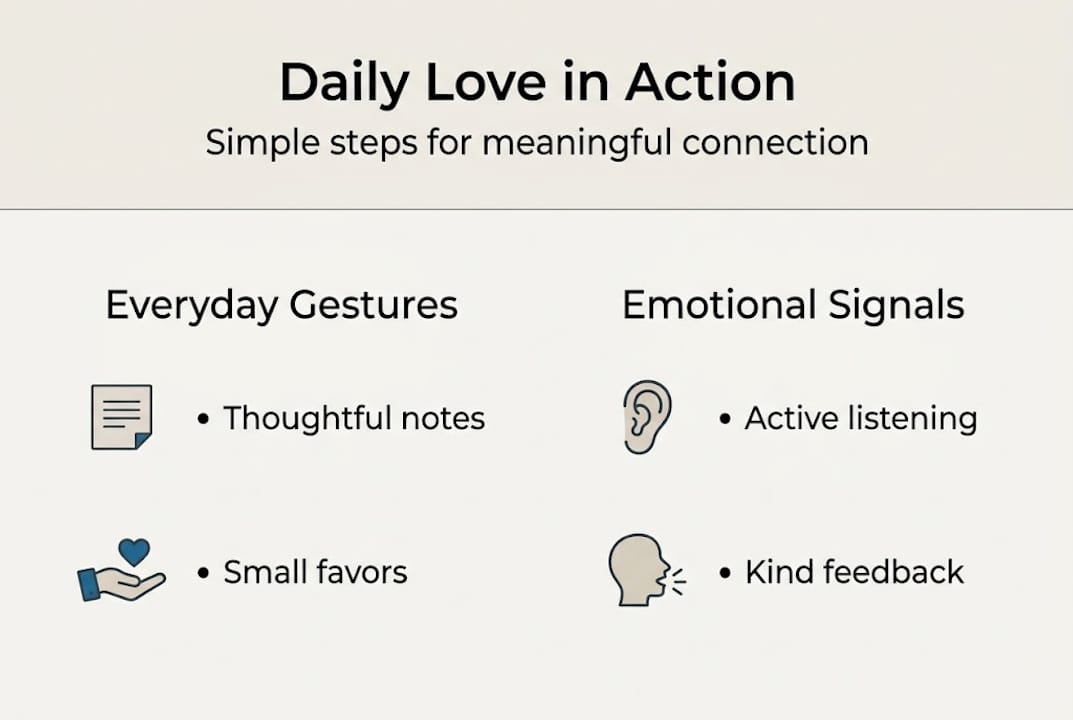
Pro Tip: Start with one small, consistent action each day for two weeks. Consistency creates emotional safety far more effectively than an occasional grand effort.
How to act: Steps to show love effectively through daily gestures
Once you’ve prepared, it’s time to take action through daily gestures. Here’s how.
Showing love isn’t a single event. It’s a practice. And like any practice, it improves with repetition and attention. The importance of empathy in relationships is well established. Empathy, the ability to feel what another person is experiencing, transforms ordinary actions into deeply meaningful ones.
Here’s a simple daily action plan:
Listen without interrupting. When your loved one speaks, give them your full attention. No phone, no planning your response. Just presence.
Acknowledge before you advise. Say “that sounds really hard” before jumping to solutions. Feeling heard matters more than being fixed.
Do one unexpected kind thing. Make their coffee, clear their workspace, or send a midday message that says you’re thinking of them.
Write it down. A short note, even a sticky note on the mirror, carries weight that spoken words sometimes don’t.
Be physically present. A hand on the shoulder, sitting close while they talk, or a spontaneous hug communicates care without words.
Different personalities connect in different ways. Here are ideas matched to various styles:
For someone introverted: A quiet evening at home where you put your phone away and just share space.
For someone who values acts of service: Handle a task they’ve been putting off without being asked.
For someone expressive: Write them a genuine compliment that names something specific you admire about them.
For someone who treasures memories: Create a small photo album or revisit a place that holds meaning for you both.
“The little things? The little moments? They aren’t little.” This captures what research on emotional expressions confirms: daily micro-gestures build stronger emotional bonds than rare, high-effort events.
Think of love as a savings account. Every small deposit builds trust, warmth, and security over time. Waiting for the “big moment” is like waiting to save money until you’re rich.
Confirm your impact: Signs and communication
After taking thoughtful action, confirming your gesture’s impact is key to building deeper trust.

Photo by: Pixabay
Showing love is only half the equation. Knowing it’s landing is equally important. You don’t need to ask for a report card, but staying observant tells you a great deal.
Signs your gestures are making a difference:
Your loved one seems more relaxed and open in your presence.
They begin initiating connection in small ways, reaching out more, sharing more.
They reference something you did and express that it mattered.
Physical cues: more eye contact, softer body language, a more relaxed tone of voice.
They start showing up for you in similar ways.
Emotional connection reduces feelings of burnout and isolation. When people feel genuinely loved, they become more emotionally available, more patient, and more resilient. So the ripple of your effort extends further than you might expect.
If your gestures seem to be missing:
Open the conversation gently. “I want to make sure I’m showing up for you in ways that feel good. What would mean the most to you right now?”
Don’t interpret silence as rejection. Some people need time to receive care before they can respond.
Check in with yourself. Are you expressing love in your own language rather than theirs?
Exploring practical self-care advice is also essential here, because you can’t sustainably pour into others if your own emotional tank is empty. Setting healthy boundaries and honoring your own needs is part of loving well.
Pro Tip: Schedule a monthly “connection check-in” where you and your loved one simply share what’s been working and what you each need more of. It sounds formal but it becomes one of the most intimate rituals a relationship can have.
A deeper truth: Why showing love effectively isn’t about perfection
Here’s something most relationship content won’t tell you directly: the pressure to get love right is one of the things that makes it feel wrong.
When you’re so focused on whether your gesture will land perfectly, you lose the very quality that makes it meaningful: genuine presence. Authenticity is what people actually feel. A stumbled compliment offered from the heart beats a smooth one delivered out of habit.
Mistakes in love aren’t failures. They’re data. You learn what resonates. You adjust. You try again. That process of repair and recommitment is, in itself, a powerful act of love. Relationships don’t ask for perfection. They ask for consistency and honesty.
A healthier approach to positivity applies here too: forcing yourself to feel or act perfectly loving can become its own form of pressure that disconnects rather than connects. Humility, the willingness to say “I’m still learning how to love you better,” is one of the most bonding things you can offer.
Explore more ways to connect and grow
The journey to express and strengthen love continues well beyond a single article.
At Life So Well, we believe that emotional connection is a lifelong practice, not a destination. If today’s guide sparked something in you, there’s so much more to explore. You can explore emotions through our curated resources to better understand your own emotional landscape and how it shapes your relationships. And when you’re ready to go further, our collection of guides in discover relationship insights offers practical, research-backed ideas for building deeper bonds. Growth in love is always available to you. Keep going.
Frequently asked questions
Showing someone you love them is often less about grand romantic gestures and more about consistent, meaningful actions. From thoughtful words and quality time to acts of service and simple everyday gestures, there are many ways to make someone feel valued and appreciated. These frequently asked questions explore practical ways to express love, strengthen emotional connection, and show someone how much they mean to you.
1. What are the best ways to show someone you love them?
The best ways to show someone you love them include giving them your full attention, listening carefully, expressing appreciation, spending quality time together, offering physical affection when appropriate, and helping with everyday tasks. Small, consistent gestures often communicate love more effectively than occasional grand displays.
2. How can you show someone you love them without saying it?
You can show love without words through thoughtful actions. Prepare their favorite meal, help with something they find stressful, remember important details, make time for them, offer a hug, or simply be present when they need support. Actions that demonstrate attention and care can communicate powerful feelings without saying “I love you.”
3. What are simple ways to show love every day?
Simple ways to show love every day include sending a thoughtful message, asking how someone is feeling, giving a sincere compliment, sharing a meal, helping with a task, expressing gratitude, or spending a few minutes together without phones or distractions. Consistency can turn these small gestures into meaningful expressions of affection.
4. How do you make someone feel loved and appreciated?
To make someone feel loved and appreciated, pay attention to what matters to them personally. Listen without immediately offering advice, acknowledge their efforts, remember important details, celebrate their achievements, and support them during difficult moments. Feeling genuinely seen, heard, and valued is an important part of emotional connection.
5. How can I show my partner that I love them?
Show your partner love by combining affection with everyday consideration. Spend intentional time together, communicate openly, express gratitude, support their goals, share responsibilities, and notice the small things that make them happy. The most meaningful gestures are usually those that reflect your partner’s individual preferences and emotional needs.
6. How can you express love through actions?
Love can be expressed through actions such as helping with responsibilities, making time for meaningful conversations, providing emotional support, remembering special occasions, offering physical affection, or doing something thoughtful without being asked. These actions demonstrate that another person’s happiness and well-being matter to you.
7. What small gestures can make someone feel special?
A handwritten note, an unexpected message, making their favorite drink, remembering something they mentioned weeks ago, giving a genuine compliment, or planning time together can make someone feel special. The gesture does not have to be expensive; personalization and thoughtfulness usually matter more than its monetary value.
8. Why are small acts of love important in a relationship?
Small acts of love help maintain connection because they communicate care during ordinary daily life, not only on birthdays, anniversaries, or special occasions. Regular expressions of appreciation, affection, attention, and support can reinforce feelings of closeness and help partners feel valued within the relationship.
9. What should I do if someone does not respond to my way of showing love?
If your gestures do not seem to resonate, talk openly about what makes the other person feel cared for. People can experience affection differently, so a gesture that feels meaningful to you may not have the same impact on them. Asking what they value can help you express love in ways they understand and appreciate.
10. How can I show someone I love them from a distance?
You can show someone you love them from a distance through regular calls, thoughtful messages, video chats, letters, surprise deliveries, shared online activities, or plans for future time together. Consistent communication and genuine interest in their daily life can help maintain emotional closeness even when you cannot be physically together.


Comments