
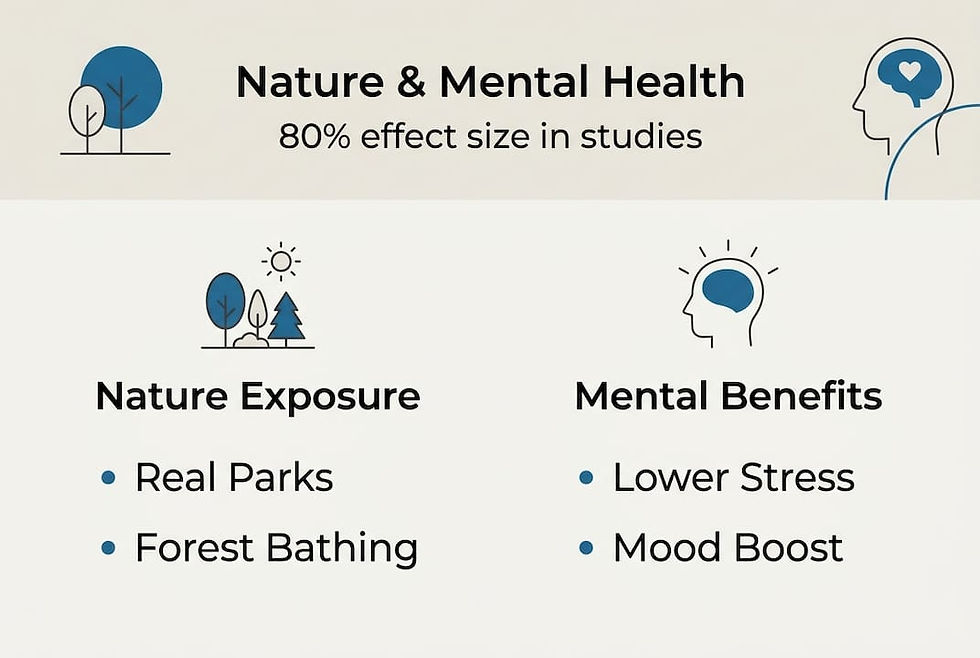
How nature enhances mental health: the 80% effect size

Many assume a single weekend hike delivers lasting mental health gains, yet repeated short intervals in nature prove far more effective than one-time visits for diagnosed conditions. This guide explores how nature enhances mental health, i.e. the surprising evidence behind nature’s therapeutic effects, practical methods like forest bathing, urban and virtual nature benefits, and realistic limitations to help you harness nature’s power for anxiety, depression, and stress reduction.
Table of Contents
Key Takeaways
Point | Details |
Repeated nature exposure | Meta-analyses show nature exposure improves anxiety, depression, and stress with clinically meaningful effects, and repeated short intervals deliver greater gains than single visits for diagnosed mental illness. |
Short sessions work | Brief sessions of 10 minutes or more, when done regularly, produce measurable reductions in symptoms, highlighting cumulative benefits from ongoing contact. |
Urban and virtual nature | Access to urban green spaces or virtual nature experiences can lower stress and anxiety, expanding options beyond traditional outdoor visits. |
Forest bathing benefits | Forest bathing or shinrin yoku involves a 2 to 3 hour guided mindful immersion with sensory exercises that can enhance immune function and reduce stress. |
Research gaps | More studies are needed on lasting long term effects and equitable access to nature based mental health interventions. |
Understanding how nature enhances mental health
Meta-analyses examining thousands of participants confirm that nature exposure significantly improves mental health outcomes in adults with mental illness, anxiety, depression, and stress. Effect sizes ranging from -0.80 to -0.87 represent substantial clinical improvements, comparable to many conventional interventions. These findings emerge from rigorous systematic reviews analyzing diverse study designs and populations.
The most surprising discovery challenges conventional wisdom about exposure patterns. Repeated short interval exposures are more effective than single visits for people with diagnosed mental illness. Sessions as brief as 10 minutes, when experienced regularly, produce measurable reductions in symptoms. This pattern suggests nature’s therapeutic value accumulates through consistent contact rather than intensive one-time experiences.
Researchers identify several mechanisms driving these benefits:
Reduced cortisol levels and physiological stress markers
Enhanced parasympathetic nervous system activation
Improved attention restoration and cognitive function
Social connection opportunities in shared green spaces
Sensory engagement that interrupts rumination patterns
Yet effects vary due to study quality and exposure patterns, requiring careful interpretation. Methodological differences in measuring outcomes, defining nature exposure, and controlling confounding variables create heterogeneity across studies. Some research suffers from small sample sizes or lacks long-term follow-up data.
Regular contact with nature can stabilize mood and improve wellbeing when integrated into daily routines. The evidence supports nature as a complementary approach within broader mental health research frameworks. Morning walks in parks, lunch breaks near trees, or weekend forest visits all contribute to cumulative mental health gains.
Pro Tip: Track your mood before and after nature visits using a simple journal to identify which environments and durations work best for your unique needs.
Understanding these evidence-based principles sets the foundation for exploring specific therapeutic practices that maximize nature’s mental health benefits.
Forest bathing: a mindful nature therapy
Forest bathing, or shinrin-yoku, originated in Japan as a structured therapeutic practice distinct from hiking or exercise. Sessions typically last 2-3 hours emphasizing slow immersion, sensory exercises, breathing, and light movement in forest settings. Practitioners guide participants through intentional engagement with their surroundings rather than destination-focused walking.
The practice unfolds through deliberate sensory activation:
Begin with grounding exercises focusing on breath and body awareness
Engage sight by observing light patterns, colors, and textures in detail
Activate hearing by identifying distinct natural sounds and their sources
Incorporate touch through feeling bark, leaves, moss, or soil
Notice scents from plants, earth, and air without judgment
Conclude with reflection or group sharing (communitea)
Phytoncides, aromatic compounds released by trees, provide measurable physiological benefits when inhaled. These volatile organic compounds boost natural killer cell activity, enhance immune function, and reduce stress hormone production. The biological response occurs passively through breathing forest air, independent of physical exertion.

Benefits can persist for a week or more after sessions, distinguishing forest bathing from temporary mood boosts. Studies document sustained reductions in anxiety, improved sleep quality, and enhanced emotional regulation extending beyond the immediate experience. This durability makes forest bathing particularly valuable for managing chronic stress and mood disorders.
Sessions typically range from 10 to 120 minutes depending on participant needs and setting. Trained guides often lead groups through specific invitations, such as finding a sit spot, creating nature art, or engaging in silent observation periods. The structure balances freedom to explore with intentional practices that deepen awareness.
Pro Tip: Incorporate communitea, a group reflection practice where participants share experiences without judgment, to deepen relaxation and build social connection that amplifies mental health benefits.
Exploring forest bathing practices and mindful living techniques together creates a comprehensive approach to nature-based wellness. The accessibility of this method extends beyond wilderness areas into urban forests and parks.
The benefits of urban and virtual nature for mental health
Urban parks and forests provide accessible alternatives when remote wilderness remains out of reach. Urban nature and virtual nature reduce anxiety, stress, and depression with strongest effects observed in young adults. City dwellers gain significant mental health improvements from nearby green spaces, challenging the assumption that pristine natural environments are necessary for therapeutic benefits.
Young adults aged 18 to 35 experience particularly robust improvements in psychological wellbeing from urban nature contact. This demographic shows heightened sensitivity to green space exposure, possibly due to developmental stage, stress levels, or technology use patterns. Even brief visits to city parks during lunch breaks or commutes produce measurable anxiety reduction.
Virtual nature exposure emerges as a valuable tool where physical access faces barriers. Virtual nature shows moderate benefits for anxiety and stress reduction through videos, virtual reality experiences, or even nature photography. While less potent than direct exposure, digital nature provides meaningful support for people with mobility limitations, severe weather constraints, or geographic isolation.
Feature | Real Urban Nature | Virtual Nature |
Anxiety reduction | Strong effect | Moderate effect |
Accessibility | Requires nearby parks | Available anywhere with technology |
Sensory engagement | Full multisensory | Primarily visual and auditory |
Physical activity | Encourages movement | Sedentary experience |
Cost | Free public spaces | Requires devices or subscriptions |
Social connection | Facilitates in-person interaction | Limited to online community |
Equity issues in access to green spaces create disparities in who benefits from nature’s mental health effects. Low-income neighborhoods and communities of color often face reduced park availability, smaller green spaces, and safety concerns that limit usage. Addressing these structural barriers requires policy interventions beyond individual wellness practices.
Urban planners increasingly recognize mental health as a design consideration:
Pocket parks within walking distance of residential areas
Green corridors connecting neighborhoods to larger natural spaces
Biophilic design elements in buildings and streetscapes
Community gardens that combine nature contact with social engagement
Exploring spiritual nature benefits alongside understanding social stress and mental health reveals how nature intersects with broader wellness dimensions. Urban nature democratizes access while virtual options fill gaps when physical presence proves impossible.
Practical recommendations and limitations of nature-based mental health care
Experts recommend approximately 120 minutes per week in nature for mental health benefits, though individual needs vary. This weekly target can be divided into daily 20-minute sessions or fewer longer visits depending on schedule and preference. Consistency matters more than achieving perfect duration in any single exposure.
Customizing exposure based on individual sensitivity and preferences maximizes therapeutic value. Some people respond strongly to water features like streams or lakes, while others prefer dense forest canopies or open meadows. Experimenting with different environments helps identify personal optimal settings.
Practitioners suggest using sensory-rich trails that engage multiple senses simultaneously:
Paths with varied terrain that require attention to footing
Routes passing through different ecosystems or elevation changes
Areas with water sounds, bird activity, or wind through trees
Trails offering both sun exposure and shade
Yet limitations include methodological flaws, unclear long-term impacts, and unequal access. Study heterogeneity stems from inconsistent definitions of nature exposure, varying outcome measures, and potential publication bias favoring positive results. Some research lacks adequate control groups or fails to account for confounding variables like physical activity or social interaction.
Long-term efficacy remains uncertain for certain populations and conditions. While short-term benefits appear robust, evidence for sustained improvements beyond several months is limited. Questions persist about optimal exposure patterns for maintaining mental health gains over years.
Weekly Nature Contact | Observed Mental Health Outcomes | Study Quality |
0-30 minutes | Minimal measurable benefit | High consensus |
30-60 minutes | Modest anxiety reduction | Moderate consensus |
60-120 minutes | Significant mood improvement | High consensus |
120+ minutes | Strong effects across multiple domains | Moderate consensus |
Daily brief exposures | Superior to weekly long sessions for diagnosed conditions | Emerging evidence |
Access inequities limit universal benefit despite nature’s therapeutic potential. Geographic location, socioeconomic status, physical ability, and safety concerns create barriers that wellness advice alone cannot overcome. Recognizing these constraints prevents blaming individuals for structural problems.
Pro Tip: Combine nature exposure with complementary wellness practices like mindful breathing, gentle stretching, or journaling to amplify mental health effects and create sustainable routines that fit your lifestyle.
Integrating wellness and nature therapy with mental exercises and nature builds comprehensive self-care strategies. Understanding both the power and limitations of nature-based interventions enables realistic expectations and effective application.
Explore holistic mental wellness with Life So Well
Nature’s mental health benefits work best within a comprehensive wellness approach addressing mind, body, emotions, and spirit together. Life So Well offers curated resources designed to support your personal growth journey through evidence-based practices and practical guidance. Our platform helps you integrate nature-based self-care with complementary strategies for emotional resilience and mental clarity. Explore our mind wellness resources for cognitive health strategies, discover emotional wellness support for managing stress and building resilience, and access spiritual wellness guidance to deepen your connection with nature and purpose. Each section provides actionable tips tailored to real-world challenges you face in creating balanced, fulfilling daily routines.
Common questions about applying nature-based mental health strategies reveal practical concerns worth addressing directly.
FAQ
What is the minimum time needed in nature to see mental health benefits?
Intervals as short as 10 minutes repeated regularly yield measurable mental health benefits, especially for diagnosed conditions. Consistency over time enhances benefits more than duration of individual sessions. Brief daily nature contact outperforms infrequent longer exposures for anxiety and depression management.
Can virtual nature experiences improve mental health when outdoor access is limited?
Virtual nature provides moderate anxiety and stress reduction effects, useful when real nature access is limited. It serves as a valuable supplement but not a complete substitute for direct outdoor exposure. People with mobility challenges or geographic constraints gain meaningful benefits from high-quality nature videos and virtual reality experiences.
What does a typical forest bathing session involve?
Sessions typically last 2-3 hours emphasizing slow immersion, sensory exercises, breathing, and light movement in forest settings. Participants engage all five senses through guided invitations rather than destination-focused hiking. The practice includes grounding exercises, silent observation periods, and often concludes with group reflection to deepen relaxation and social connection.
Are there barriers that limit who benefits from nature’s mental health effects?
Access inequities and research heterogeneity mean mental health benefits from nature are not equally experienced by all populations. Disadvantaged groups often face barriers including limited nearby green spaces, safety concerns, and mobility challenges. Research lacks consensus on long-term, universal benefits, making realistic expectations important for effective application.
Recommended
This article is only for information and does not offer medical or other expert advice. If you need medical or other expert advice, please consult doctors and certified experts.


Comments