
How to create a balanced lifestyle for mental wellness
Updated: Mar 22

Maintaining mental and emotional balance feels impossible when stress, responsibilities, and daily demands pile up. You’re not alone if you feel like you’re just surviving each week rather than truly thriving. Creating a balanced lifestyle through intentional self-care, mindfulness practices, and effective stress management can transform your well-being. This guide provides evidence-backed strategies to help you build sustainable habits that nurture both your mind and body, moving you from merely getting by to genuinely flourishing in your daily life.
Table of Contents
Understanding What A Balanced Lifestyle Means For Mental Wellness
Preparing To Create A Balanced Lifestyle: Self-Care Essentials And Mindset
Step-By-Step Guide: How To Integrate Mindfulness, Stress Management, And Self-Care Into Daily Life
Common Challenges And How To Stay On Track With Your Balanced Lifestyle Journey
Explore Life So Well’s Resources To Support Your Balanced Lifestyle
Key takeaways
Point | Details |
Mindfulness with acceptance reduces stress | Combining stress monitoring with acceptance skills creates better physiological stress responses than monitoring alone. |
Self-care enhances mental health | Physical activity, social connection, and nature exposure work together to strengthen emotional resilience and well-being. |
Personalize mindfulness practices | Tailoring techniques to your needs prevents potential adverse effects and maximizes benefits for your unique situation. |
Monitor and adjust regularly | Tracking your stress levels and coping abilities allows you to refine strategies and maintain long-term balance. |
Nurture mind and body together | Balanced lifestyles integrate mental, emotional, and physical wellness rather than addressing them separately. |
Understanding what a balanced lifestyle means for mental wellness
A balanced lifestyle extends far beyond physical health checkboxes. It encompasses deliberate attention to your mental and emotional needs, creating space for genuine wellness rather than just survival mode. True self-care involves comprehensive mental health maintenance, not simply recovering lost energy at the end of exhausting days.
The distinction matters profoundly. Recovery means bouncing back from depletion so you can face another draining week. Authentic self-care means proactively nurturing your mental and emotional reserves before they run dry. You’re building resilience, not just patching holes. This shift transforms how you approach daily life and manage your emotions with greater awareness and skill.
Core elements of a mentally balanced lifestyle include:
Mindfulness practices that cultivate present-moment awareness
Regular physical activity that supports both body and mind
Meaningful social connections that provide support and belonging
Effective stress management techniques tailored to your needs
Time in nature to restore mental clarity and reduce anxiety
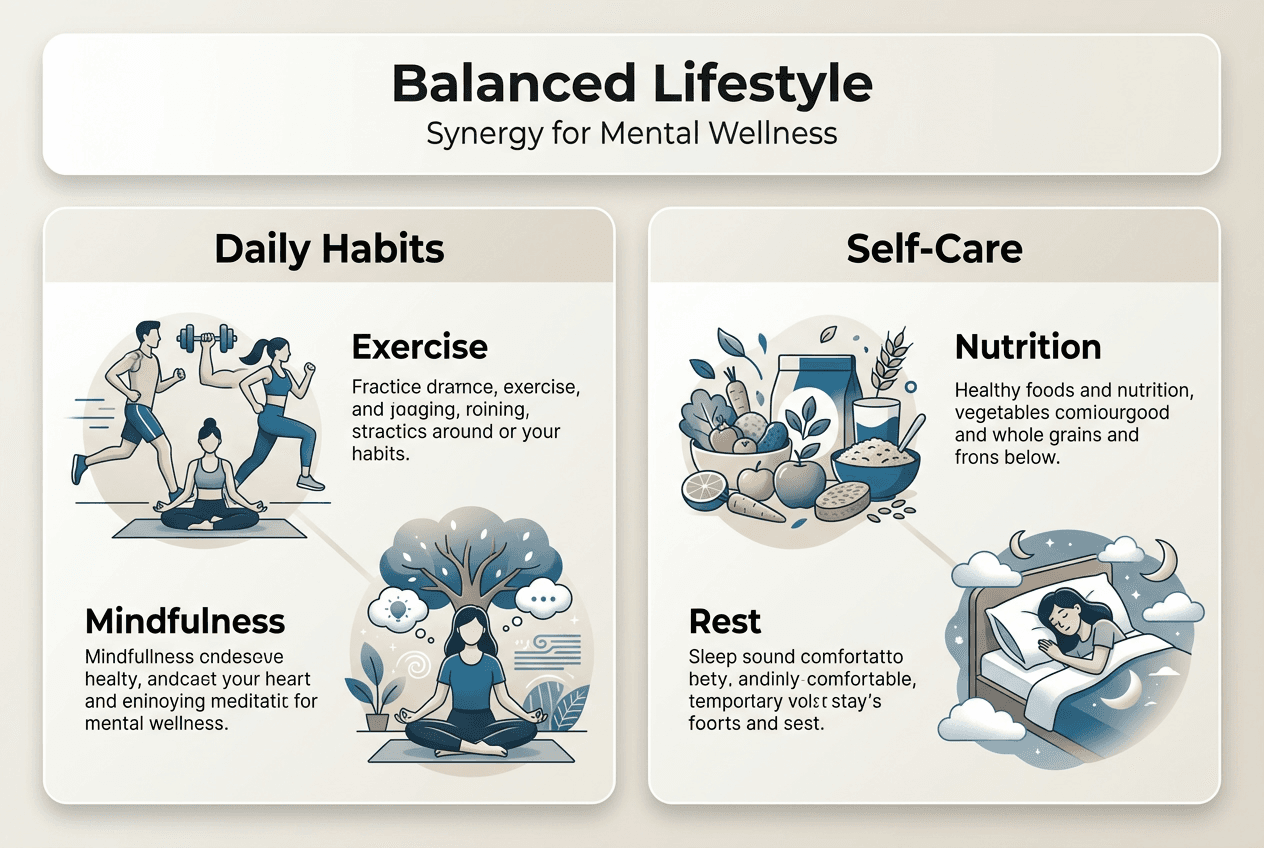
These components work synergistically. Physical movement boosts mood-regulating neurotransmitters while mindfulness enhances your ability to recognize and respond to stress signals. Social bonds provide emotional buffers during challenging times. The following sections will show you exactly how to weave these elements into your daily routine, creating sustainable practices that support lasting mental wellness.
Preparing to create a balanced lifestyle: self-care essentials and mindset
Before diving into new habits, you need the right foundation. Understanding what truly supports mental wellness helps you build practices that stick rather than adding more items to an overwhelming to-do list. Essential self-care practices that research consistently validates include:
Mindfulness meditation for stress reduction and emotional regulation
Physical activity that you genuinely enjoy and can sustain
Nutritious eating patterns that stabilize energy and mood
Regular social interaction with supportive people
Time outdoors to benefit from nature’s restorative effects
Mindfulness means paying attention to present experiences without harsh judgment. It’s not about emptying your mind or achieving perfect calm. Instead, you’re developing awareness of thoughts, feelings, and bodily sensations as they arise. Research shows that monitoring must couple with acceptance for beneficial stress outcomes. Simply tracking your stress without accepting what you find can actually increase physiological stress responses.

This insight reveals a crucial mindset shift. You’re not trying to eliminate stress or control every emotion. You’re learning to observe your internal experiences with curiosity and compassion, then respond skillfully rather than react automatically. This approach nurtures your mental wellness instead of demanding perfection.
However, mindfulness isn’t universally beneficial in identical ways. Some individuals experience challenging reactions, particularly those with trauma histories or certain mental health conditions. Personalizing your practice matters enormously. Start with brief sessions, use guided recordings if helpful, and pay attention to how different techniques affect you.
Pro Tip: Begin with just three minutes of mindfulness daily and keep a simple mood log. Note how you feel before and after practice to identify what works best for your unique nervous system and life circumstances.
Explore various self-care practices and body care practices to discover your optimal combination. What soothes your friend might energize you. What calms you in the morning might feel wrong in the evening. This experimentation phase builds self-knowledge that guides all future wellness decisions.
Step-by-step guide: how to integrate mindfulness, stress management, and self-care into daily life
Building a balanced lifestyle requires systematic integration rather than sporadic efforts. Follow these progressive steps to create sustainable habits:
Establish a daily mindfulness anchor by choosing one consistent time for practice, whether morning coffee, lunch break, or before bed.
Add movement you enjoy at least four days weekly, starting with 20 minutes and gradually increasing as it becomes habitual.
Schedule regular social connection, even brief check-ins with friends or family, treating these appointments as non-negotiable.
Practice daily reflection that includes both monitoring your stress levels and accepting your current state without self-criticism.
Adjust your approach based on mood patterns and coping effectiveness, remaining flexible as life circumstances change.
Different approaches to managing stress offer distinct benefits. Understanding these differences helps you choose techniques that match your needs:
Approach | Focus | Key Benefit |
Mindfulness-based | Present-moment awareness and acceptance | Reduces rumination and emotional reactivity |
Cognitive-based | Thought patterns and beliefs | Challenges unhelpful thinking and reframes situations |
Behavioral | Actions and habits | Creates structure and builds coping skills |
Acceptance-based | Allowing difficult experiences | Decreases struggle with unavoidable discomfort |
Mindfulness-Based Cognitive Therapy combines these approaches powerfully. MBCT reduces depression, anxiety, and stress while improving emotional regulation. It teaches you to recognize when your mind spirals into unhelpful patterns and respond with awareness rather than getting swept away. You learn to observe thoughts as mental events rather than absolute truths.
Implement MBCT principles by noticing when you’re rehashing the past or worrying about the future. Gently redirect attention to present sensations, your breathing, or immediate surroundings. This interrupts rumination cycles before they intensify anxiety or low mood.
Pro Tip: Try mindful breathing techniques for just two minutes when stress rises. Focus on the physical sensation of breath moving in and out, using this anchor to increase body awareness and create space between stimulus and response.
Journaling or mood tracking provides valuable feedback. Record your stress levels, sleep quality, energy, and emotional state daily. After two weeks, patterns emerge showing which practices deliver the greatest benefit for you personally. This data-driven approach removes guesswork and helps you invest time in strategies that genuinely work.
Common challenges and how to stay on track with your balanced lifestyle journey
Even well-designed plans encounter obstacles. Anticipating common challenges helps you navigate them without abandoning your balanced lifestyle goals. Typical difficulties include:
Negative experiences during meditation such as increased anxiety or intrusive thoughts
Stress relapse when life demands intensify unexpectedly
Time constraints that make consistent practice feel impossible
Motivation dips after initial enthusiasm fades
Perfectionism that creates all-or-nothing thinking
When meditation feels uncomfortable or counterproductive, modify your approach immediately. Try shorter sessions, different techniques like body scans instead of breath focus, or movement-based practices like walking meditation. Mindfulness meditation can trigger adverse effects in some individuals, especially those with trauma histories or mental health challenges. This doesn’t mean mindfulness won’t help you, but it does mean your path might look different from standard recommendations.
Personalizing mindfulness practices to match your nervous system, life experiences, and current mental state isn’t optional. It’s essential for safety and effectiveness. What works for others may not work for you, and that’s completely valid.
Stress relapse happens to everyone. Life delivers unexpected challenges, and your carefully built routines can crumble quickly. When this occurs, return to the smallest sustainable practice rather than trying to resume everything at once. Even five minutes of mindfulness or a brief walk maintains the neural pathways you’ve developed.
Time constraints feel real because they often are real. Instead of adding lengthy practices, integrate wellness into existing activities. Practice mindful eating during meals you’re already consuming. Take phone calls while walking. Use your commute for breathing exercises or gratitude reflection. These micro-practices accumulate significant benefits without requiring extra time blocks.
Motivation naturally fluctuates. Build systems that don’t rely solely on feeling motivated. Set up environmental cues like laying out workout clothes the night before or keeping your meditation cushion visible. Tell supportive friends about your goals to create gentle accountability. Track progress visually with a simple calendar check-off system.
If you’re experiencing emotional burnout recovery, be especially patient with yourself. Rebuilding takes time, and pushing too hard can deepen exhaustion. Professional support from therapists or counselors provides valuable guidance when self-directed efforts feel insufficient. Seeking help demonstrates wisdom and self-awareness, not weakness.
Explore Life So Well’s resources to support your balanced lifestyle
Creating sustainable mental wellness practices becomes easier with the right support and guidance. Life So Well offers comprehensive resources specifically designed to help you build and maintain the balanced lifestyle you’re working toward. Our platform provides expert articles, practical tools, and evidence-based strategies across all dimensions of wellness. Explore our mind resources for deeper dives into mindfulness techniques and cognitive strategies. Visit our emotions resources to strengthen emotional regulation and resilience. Check out body wellness resources for guidance on physical practices that support mental health. Each section offers actionable insights tailored to help you implement and sustain the balanced lifestyle strategies outlined in this guide, meeting you wherever you are on your wellness journey.
FAQ
How long does it take to feel benefits from mindfulness and self-care practices?
Most people notice initial benefits within two to four weeks of consistent daily practice. You might experience better sleep, reduced anxiety, or improved mood regulation relatively quickly. However, the deeper transformative effects typically emerge over three to six months as neural pathways strengthen and new habits become automatic. Individual results vary significantly based on practice frequency, the specific techniques you use, your starting point, and personal factors like stress levels and life circumstances.
Can mindfulness meditation cause negative effects? How can I avoid them?
Yes, some practitioners experience challenging reactions including increased anxiety, intrusive thoughts, or emotional overwhelm. Mindfulness meditation can trigger adverse effects in some individuals, especially those with trauma histories or mental health challenges. Start with very brief sessions of three to five minutes and use guided practices from reputable sources. If you notice consistently negative reactions, try different techniques like movement-based mindfulness or consult a mental health professional who can help you find approaches that work safely for your unique situation.
What are simple self-care activities I can do daily to maintain a balanced lifestyle?
Simple daily activities include five to ten minutes of mindfulness meditation or breathing exercises, a 20-minute walk or other enjoyable movement, one meaningful conversation with a friend or family member, 15 minutes outdoors in natural light, and maintaining consistent sleep and wake times. These practices don’t require special equipment or significant time investment. You can start with just one or two and gradually add more as they become habitual. For additional guidance on rest and recovery, explore our sleep and recovery tips to optimize this crucial wellness component.
What if I miss several days of my balanced lifestyle routine?
Missing days is completely normal and doesn’t erase your progress. Neural pathways and habits you’ve built remain even after breaks. Simply resume with the smallest sustainable practice rather than trying to make up for lost time. One three-minute meditation or a brief walk restarts your momentum without overwhelming you. Avoid all-or-nothing thinking that says you’ve failed and should quit entirely. Balanced living includes flexibility and self-compassion when life disrupts your routines.
How do I know if my balanced lifestyle practices are actually working?
Track simple metrics like sleep quality, energy levels, mood stability, and stress reactivity weekly. Notice whether you’re handling challenges more calmly, recovering from setbacks faster, or feeling more present in daily activities. Physical signs include better sleep, reduced tension headaches, and improved digestion. Emotional indicators include less reactivity, greater patience, and more frequent positive emotions. If you’re not seeing improvements after six to eight weeks of consistent practice, adjust your approach or consult a wellness professional for personalized guidance.
Recommended
This article is only for information and does not offer medical or other expert advice. If you need medical or other expert advice, please consult doctors and certified experts.


Too often, advice about “wellness” feels overwhelming, but here the focus on small, sustainable changes makes it feel achievable for everyday life. I especially agree with the idea that neglecting one area - like rest or relationships - can affect everything else, since mental well-being depends on multiple interconnected factors. Research also shows that consistent habits such as good sleep, physical activity, and social connection play a major role in emotional stability and resilience.
Loved this article! It’s uplifting, easy to follow, and full of practical ideas that actually feel doable in real life. A great reminder that small daily changes can lead to a healthier, more balanced mind. Thank you for the inspiration! 🥰