
Self-care's role in wellness: boost mental health now
Updated: Mar 22

Most people believe self-care means bubble baths and face masks, but science reveals a far more powerful truth. Research shows that combined physical and psychological interventions produce the strongest wellness gains, yet many struggle to implement evidence-based strategies effectively. This article cuts through misconceptions to deliver practical, research-backed self-care methods that genuinely enhance mental and emotional well-being. You’ll discover how to leverage behavior change techniques, optimize sleep quality, reduce inflammation, and tailor approaches to your unique needs for lasting results.
Table of Contents
Key takeaways
Point | Details |
Combined interventions work best | Physical activity paired with psychological techniques produces the largest well-being improvements. |
Mindfulness delivers consistent benefits | Meditation, compassion practices, and yoga show moderate but reliable mental health gains. |
Behavior change techniques ensure sustainability | Goal setting, social support, and action planning dramatically increase long-term adherence. |
Sleep and inflammation matter | Quality rest and reduced inflammatory markers are critical targets for effective self-care routines. |
Personalization maximizes results | Tailoring strategies to individual health conditions and preferences optimizes effectiveness and motivation. |
Understanding the science behind self-care and wellness
Self-care extends far beyond superficial indulgence. Within holistic wellness frameworks, it encompasses deliberate practices targeting mental, emotional, and physical health simultaneously. Scientific evidence demonstrates that most interventions improved well-being compared with inactive controls, validating self-care’s essential role in health optimization. The misconception that self-care is purely indulgent undermines its therapeutic potential and discourages people from adopting life-changing habits.
Research reveals that combined exercise and psychological interventions deliver superior outcomes compared to standalone approaches. This synergy addresses multiple wellness dimensions simultaneously, creating compound benefits that single-method strategies cannot match. Self-Determination Theory provides the motivational framework explaining why integrated approaches succeed. When you satisfy needs for autonomy, competence, and relatedness through self-care, intrinsic motivation flourishes and sustains behavior change.
The science is clear: self-care influences motivation in health behavior change with a large effect size. This finding contradicts the belief that willpower alone drives wellness improvements. Instead, structured self-care practices create psychological conditions that make healthy behaviors feel natural rather than forced. Understanding this mechanism transforms how you approach personal wellness, shifting from struggle to sustainable growth.
Key scientific principles supporting self-care effectiveness include:
Neuroplasticity allows consistent practices to rewire stress responses and emotional regulation
Behavioral reinforcement through small wins builds momentum for larger lifestyle changes
Psychophysiological integration means mental practices produce measurable physical health improvements
Dose-response relationships show that regular, moderate self-care outperforms sporadic intensive efforts
“The evidence supports a holistic view where mental, emotional, and physical wellness are inseparable. Interventions addressing multiple dimensions simultaneously produce the most robust and enduring benefits.”
This integrated perspective aligns with workplace wellness success principles, demonstrating that comprehensive approaches work across contexts. The well-being intervention study analyzing hundreds of trials confirms that multi-component strategies consistently outperform single-focus methods. You can apply this knowledge by designing personal routines that blend physical activity, psychological techniques, and social connection rather than relying on isolated practices.
Effective self-care practices backed by research
The most powerful self-care strategy combines physical exercise with psychological interventions. Studies show combined exercise-psychological interventions produced the largest effect on well-being, with effect sizes nearly double those of standalone methods. This means pairing a morning run with mindfulness meditation delivers exponentially greater benefits than either practice alone. The synergy creates physiological stress relief alongside cognitive reframing, addressing wellness from multiple angles simultaneously.
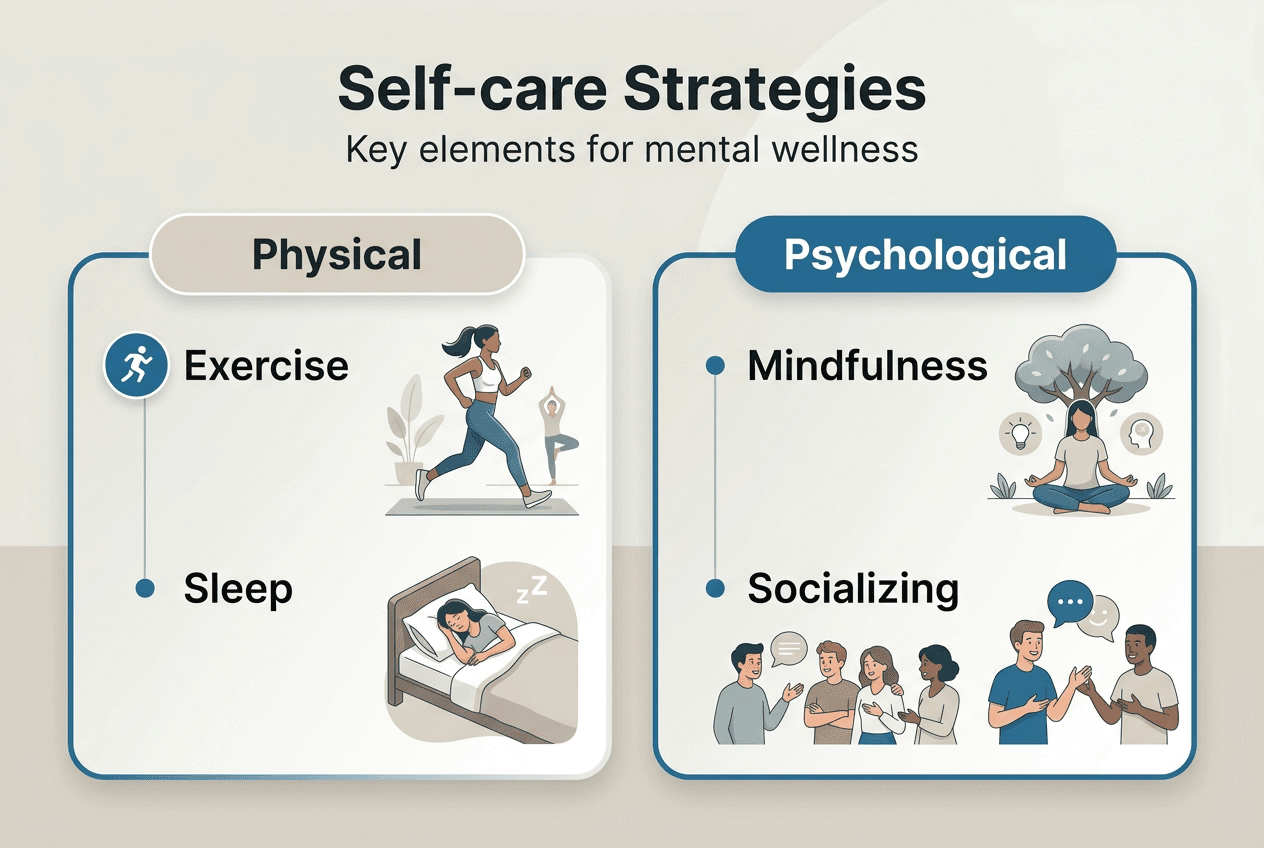
Standalone practices still offer substantial value when combined approaches aren’t feasible. Research indicates mindfulness, compassion, yoga, and exercise interventions show moderate effects on mental health and emotional regulation. These methods provide accessible entry points for building self-care habits without overwhelming complexity. You can start with whichever practice feels most natural and gradually layer additional techniques as your routine matures.
Evidence-backed psychological techniques that enhance well-being include:
Mindfulness meditation focusing on present-moment awareness without judgment
Positive psychology interventions emphasizing gratitude, strengths, and meaning
Compassion practices cultivating kindness toward yourself and others
Cognitive reframing techniques that challenge negative thought patterns
Implementing a simple daily self-care routine requires strategic planning rather than vague intentions. Follow these steps to build sustainable habits:
Select one physical activity you genuinely enjoy, whether walking, dancing, or strength training.
Pair it with a brief psychological practice like five minutes of mindful breathwork techniques before or after.
Schedule this combination at the same time daily to leverage habit formation mechanisms.
Track completion using a simple calendar check system to build momentum through visible progress.
Adjust intensity and duration based on energy levels rather than forcing rigid adherence.
Pro Tip: Incorporate benefits of silence practices by spending five minutes in complete quiet before your routine. This primes your nervous system for deeper mindfulness effects and amplifies stress reduction benefits throughout the day.
The well-being strategies study analyzing diverse interventions reveals that consistency matters more than intensity. You achieve better results with 20 minutes daily than sporadic hour-long sessions. This finding liberates you from perfectionist thinking that sabotages many wellness attempts. Start small, stay consistent, and allow compound effects to build naturally.
Explore comprehensive mind wellness strategies that integrate these research-backed approaches into cohesive programs. The key is selecting practices that align with your preferences and lifestyle constraints rather than forcing methods that feel unnatural. When self-care feels enjoyable rather than obligatory, adherence becomes effortless and benefits multiply exponentially.
Nuances of self-care: sleep, inflammation, and tailoring approaches
Sleep disturbances affect over 30% of adults and directly undermine mental health, productivity, and emotional resilience. Poor sleep quality creates a vicious cycle where stress disrupts rest, which then amplifies stress sensitivity the following day. Breaking this pattern requires targeted interventions that address both physiological and psychological sleep barriers. Evidence shows standalone digital mind-body interventions significantly improve sleep and mental health simultaneously, offering accessible solutions for widespread sleep challenges.

Digital tools like meditation apps and online yoga programs provide scalable self-care options that fit modern lifestyles. These platforms deliver evidence-based techniques without requiring expensive classes or specialized equipment. The research demonstrates meaningful improvements in sleep architecture and mental health markers, validating digital approaches as legitimate wellness interventions rather than mere conveniences.
Inflammation represents another critical self-care target often overlooked in conventional wellness discussions. Chronic low-grade inflammation links to depression, anxiety, cardiovascular disease, and accelerated aging. Remarkably, positive psychology interventions reduce inflammatory biomarkers significantly, proving that mental practices produce measurable physical health changes. This mind-body connection reveals how emotional wellness strategies deliver systemic health benefits beyond mood improvements.
Intervention Type | Sleep Quality Impact | Inflammation Reduction | Mental Well-being Effect |
Combined Exercise-Psychological | High | Moderate to High | Very High |
Digital Mind-Body Programs | Moderate to High | Low to Moderate | Moderate to High |
Positive Psychology Interventions | Low to Moderate | Moderate to High | High |
Standalone Physical Activity | Moderate | Moderate | Moderate |
Mindfulness Meditation | Moderate to High | Moderate | Moderate to High |
Quality sleep and inflammation reduction deliver cascading wellness benefits:
Enhanced cognitive function and emotional regulation capacity
Improved immune system resilience against illness and chronic disease
Better stress hormone balance reducing cortisol-related health risks
Increased energy availability for maintaining other self-care practices
Reduced risk of depression and anxiety disorders
Pro Tip: Customize self-care practices using graded tasks matched to your current health status. If chronic pain limits exercise, start with gentle stretching and gradually increase intensity as tolerance improves. Pair physical modifications with social support from accountability partners who understand your constraints, maximizing adherence through personalized adaptation.
Tailoring approaches to individual needs transforms generic advice into powerful personal tools. What works brilliantly for one person may feel ineffective or unsustainable for another due to differences in health conditions, preferences, schedules, and motivational drivers. The digital mind-body sleep study emphasizes that intervention effectiveness varies based on individual characteristics, highlighting the importance of experimentation and adjustment.
Explore sleep and recovery strategies that address your specific sleep challenges rather than applying one-size-fits-all solutions. The positive psychology inflammation research demonstrates that even brief daily practices produce meaningful biomarker changes, making these interventions accessible regardless of time constraints. Personalization ensures your self-care routine feels sustainable rather than burdensome, dramatically increasing long-term success rates.
Applying behavior change techniques to maintain self-care habits
Knowing effective self-care practices means nothing without systems ensuring consistent implementation. Behavior change techniques provide the structural support transforming good intentions into lasting habits. Research identifies goal setting, social support, instruction, and graded tasks as significantly increasing physical activity adherence, with principles applying broadly across self-care domains. These techniques address the motivation and capability gaps that derail most wellness attempts.
Goal setting works best when targets are specific, measurable, and time-bound rather than vague aspirations. Instead of “exercise more,” commit to “walk 20 minutes every Monday, Wednesday, and Friday at 7am.” This specificity eliminates decision fatigue and creates clear success criteria. Social support amplifies commitment through accountability and encouragement, making you far more likely to follow through when others know your intentions.
Health Condition | Most Effective BCT Combination | Adherence Improvement | Key Success Factor |
General Wellness | Goal Setting + Social Support | 40-60% | Accountability partnerships |
Chronic Pain | Graded Tasks + Instruction | 35-50% | Gradual progression matching capacity |
Mental Health Conditions | Action Planning + Coping Strategies | 45-65% | Barrier anticipation and problem-solving |
Sleep Disorders | Implementation Intentions + Habit Stacking | 30-45% | Environmental cue consistency |
Stress Management | Social Support + Self-Monitoring | 40-55% | Regular progress tracking and adjustment |
Creating effective action plans and coping strategies requires systematic thinking:
Identify specific situations where self-care typically fails, like skipping meditation when mornings feel rushed.
Develop if-then plans addressing these barriers: “If I’m running late, then I’ll do five minutes of breathwork during my commute.”
Prepare backup options for common obstacles ensuring you maintain momentum despite imperfect conditions.
Schedule weekly reviews assessing what worked, what didn’t, and how to adjust strategies accordingly.
Celebrate small wins to reinforce motivation and build confidence in your capability to sustain change.
Social support operates through multiple mechanisms beyond simple accountability. Sharing wellness journeys creates emotional connection, normalizes struggles, and provides practical problem-solving resources. The social connection benefits extend beyond self-care adherence to directly improve mental and emotional well-being through reduced isolation and increased belonging.
Pro Tip: Pair graded tasks with social incentives by joining group activities that progressively increase in challenge. Start with beginner yoga classes and advance to intermediate levels with classmates who share your journey. This combination optimizes adherence by matching physical progression to social bonding, making continued participation feel rewarding rather than obligatory.
Implementation intentions, action planning, and coping planning are key moderators determining whether health behavior changes stick or fade. These techniques work by reducing the cognitive load required for healthy choices, making desired behaviors the path of least resistance. When you pre-decide responses to common scenarios, you bypass willpower depletion and act automatically according to your wellness values.
Customizing behavior change techniques to personal needs ensures strategies feel supportive rather than controlling. Some people thrive with detailed tracking systems while others find them demotivating. Experiment with different approaches, paying attention to which methods energize versus drain you. The physical activity behavior change study confirms that matching techniques to individual preferences dramatically improves outcomes. Your self-care system should feel like a helpful framework, not a rigid prison limiting spontaneity and joy.
The health behavior change techniques research emphasizes that sustainable change requires addressing both motivation and capability simultaneously. You need compelling reasons to act plus practical skills making action feasible. Behavior change techniques provide the bridge between knowing what to do and actually doing it consistently enough for compound benefits to emerge.
Explore holistic wellness solutions at Life So Well
You’ve learned how evidence-based self-care transforms mental and emotional well-being through integrated physical and psychological practices. Now take the next step by exploring specialized resources designed to support your unique wellness journey. Life So Well offers comprehensive guidance across interconnected wellness dimensions, helping you apply these research-backed strategies effectively. Discover mind wellness resources featuring mindfulness techniques, stress management tools, and cognitive strategies that complement the practices you’ve learned. Explore emotional wellness solutions providing support for resilience building, positive psychology applications, and emotional regulation skills. Access physical wellness support covering sleep optimization, nutrition insights, and movement practices that integrate seamlessly with mental and emotional self-care. These resources translate scientific evidence into practical daily actions, empowering you to build sustainable wellness habits tailored to your needs and goals.
Frequently asked questions
What is the role of self-care in mental wellness?
Self-care serves as the foundation for mental wellness by providing structured practices that regulate emotions, reduce stress, and build psychological resilience. Research demonstrates that consistent self-care routines create neurological changes improving stress response and emotional regulation capacity. These practices work preventatively by strengthening mental health before crises occur, rather than only addressing problems after they develop.
Which self-care practices most effectively improve sleep?
Digital mind-body interventions significantly improve sleep health through accessible tools like meditation apps and online yoga programs. Consistent sleep routines paired with stress management techniques create optimal conditions for quality rest. Combining relaxation practices with sleep hygiene basics like consistent bedtimes and screen-free wind-down periods produces the strongest results. Explore sleep and recovery strategies for comprehensive guidance.
How can behavior change techniques support lasting self-care habits?
Goal setting, social support, and action planning increase physical activity adherence by addressing both motivation and capability barriers. Setting specific goals eliminates ambiguity while social support provides accountability and encouragement during challenging periods. Planning responses to common obstacles through if-then strategies ensures you maintain momentum despite imperfect conditions. Leverage social connections for well-being to build supportive networks amplifying your success.
Are positive psychology interventions effective for physical health?
Positive psychology interventions reduce inflammatory biomarkers significantly, demonstrating that mental wellness practices produce measurable physical health improvements. Chronic inflammation links to cardiovascular disease, depression, and accelerated aging, making inflammation reduction a critical wellness target. Mental practices like gratitude exercises and strengths-based interventions create systemic benefits extending far beyond mood enhancement. This mind-body connection validates holistic approaches addressing mental and physical health simultaneously, with social connections reducing inflammation through stress buffering mechanisms.
Recommended
This article is only for information and does not offer medical or other expert advice. If you need medical or other expert advice, please consult doctors and certified experts.


Comments