
What is marriage? Types, benefits, and success factors

TL;DR:
Marriage varies across cultures and value systems, serving different social, legal, and emotional functions.
Legal marriage requires licenses and officiants, with alternative forms like common law and civil unions having varying recognition.
High-quality marriage promotes health and happiness, especially for men, but relationship quality is crucial.
Marriage is one of the most universal human institutions, yet its meaning shifts depending on who you ask. In 2023, the US marriage rate stood at 6.1 per 1,000 people, while the divorce rate sat at 2.4 per 1,000. Those numbers tell a story of a relationship structure that remains deeply popular but far from simple. Whether you are thinking about getting engaged, recently said yes, or simply curious about what marriage actually means in modern life, this guide walks you through its definitions, legal forms, health effects, and the evidence-backed habits that help marriages thrive.
Table of Contents
Key Takeaways
Point | Details |
Marriage is multifaceted | It combines legal, social, cultural, and emotional dimensions, and definitions change across regions and time. |
Types of marriage vary | Legal, common law, same-sex, and other forms exist, but recognition and requirements depend on jurisdiction. |
Health benefits and burdens | Marriage can boost well-being, but effects depend on relationship quality and may differ for men and women. |
Success strategies matter | Positive communication, shared activities, and premarital counseling significantly reduce divorce risk and strengthen relationships. |
Defining marriage: Social, legal, and cultural dimensions
At its core, marriage is a social contract. It binds two people legally, emotionally, and often spiritually. But that definition only scratches the surface. Across cultures and centuries, marriage has served different purposes: securing property, forming alliances, raising children, and more recently, pursuing personal fulfillment and companionship.
From a traditional or religious standpoint, marriage is viewed as a sacred covenant, typically between a man and a woman, oriented toward procreation and rooted in a divine plan. From a modern secular perspective, marriage is a contract built on mutual love, personal growth, and shared life goals rather than obligation or religious duty. Neither view is wrong. They simply reflect different value systems.
Culture plays a massive role in how marriage is understood and practiced. Research shows that autonomy-valuing cultures tend to have higher divorce rates and greater acceptance of divorce, while cultures that emphasize embeddedness and community tend to keep marriages intact longer, even under strain. This is not about which culture is “right.” It reflects how deeply our social environment shapes our relationship expectations.
Here is a quick comparison of how marriage is viewed across different frameworks:
Framework | Primary purpose | View on divorce |
Traditional/religious | Procreation, spiritual covenant | Discouraged or forbidden |
Modern secular | Love, fulfillment, companionship | Accepted when needed |
Economic/historical | Property, alliance, survival | Practical decision |
Cultural/communal | Social cohesion, family duty | Varies by community |
Marriage also affects how we connect with the world around us. Strong marriages often serve as the foundation for strengthening social connections that extend beyond the couple into family, community, and broader networks. The institution, whatever form it takes, rarely exists in isolation.
Key functions marriage has historically served:
Legal recognition of partnership and shared assets
Framework for raising children within a stable household
Emotional and psychological support between partners
Social legitimacy and community belonging
Economic cooperation and resource sharing
“Marriage is not a destination. It is a living relationship that reflects the values, culture, and era of the people within it.”
Types of marriage: Legal, common law, same-sex, and beyond
Once you understand what marriage means, it helps to know the different legal and social forms it can take. Not all marriages are created equal in the eyes of the law, and the type of marriage you enter shapes your rights, responsibilities, and protections.
Legal (ceremonial) marriage is the most common form. It requires a government-issued marriage license, a ceremony officiated by an authorized person, and registration with the state. This is the standard path most couples take.
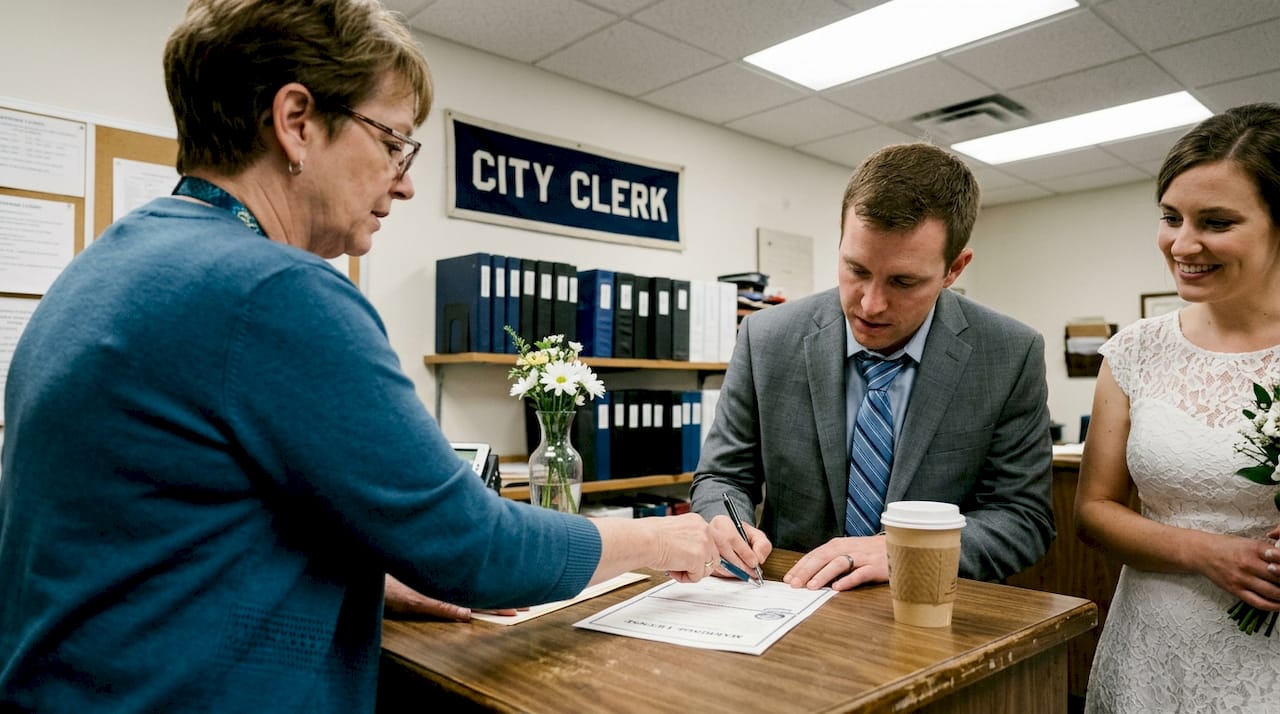
Common law marriage is less straightforward. Only 8 to 10 US states currently recognize new common law marriages, and they require cohabitation, a mutual intent to be married, and public representation as a married couple. Simply living together for years does not automatically create a common law marriage.
Same-sex marriage became federally legal in the US following the landmark Obergefell v. Hodges decision in 2015. Today, same-sex marriage is legal in more than 32 countries, reflecting a significant global shift in how marriage is defined and who it includes.
Civil unions and domestic partnerships offer some legal protections similar to marriage but without full federal recognition. These vary widely by state.
Annulment differs from divorce in that it legally declares a marriage never valid to begin with. Grounds typically include fraud, incapacity, or coercion. It is relatively rare.
Polygamy and group marriages are not legally recognized in the United States. Even if participants consider themselves married, polygamous arrangements are treated as non-marital relationships under US law.
Here is a summary of marriage types and their legal status:
Marriage type | Legal in US? | Key requirement |
Ceremonial/legal | Yes, all states | License and officiant |
Common law | 8 to 10 states only | Cohabitation and intent |
Same-sex | Yes, all states | Same as ceremonial |
Civil union | Varies by state | State registration |
Polygamy | No | N/A |
Steps to prepare before entering any form of legal marriage:
Research your state’s specific marriage license requirements
Confirm whether your state recognizes common law marriages if applicable
Discuss legal protections with a family law attorney
Consider a prenuptial agreement for financial clarity
Understand how your marriage type affects federal benefits
Pro Tip: If you and your partner have lived together for years without a ceremony, check your state’s laws on common law marriage. You may already have legal obligations without realizing it, and understanding the relationship stress impact of unresolved legal ambiguity can save you both significant strain.
Marriage and health: Effects on well-being and happiness
Here is something that might surprise you: marriage does not affect everyone’s health equally. Research consistently shows that marriage benefits men more than women on average when it comes to physical health and happiness, while women often carry a heavier emotional and domestic load within the relationship. That imbalance matters, and it is worth naming honestly.
That said, a high-quality marriage, one built on mutual respect, emotional support, and shared effort, is genuinely good for both partners. Here is what the evidence shows:
Married individuals tend to live longer than unmarried peers
Marriage is linked to lower rates of depression and anxiety for many people
Married people often have better cardiovascular health outcomes
Social support within marriage buffers the effects of stress
Emotional intimacy in marriage supports immune function
The ripple effect of a strong marriage extends into daily habits. Couples who feel secure and supported tend to sleep better, exercise more consistently, and seek medical care earlier. Think of it as a positive feedback loop: a healthy relationship reinforces healthy behaviors, and healthy behaviors reinforce the relationship.
But the opposite is also true. A stressful or conflict-heavy marriage can be worse for your health than being single. The quality of the relationship matters far more than the legal status alone. Practicing mindfulness and mental health habits together can help couples stay emotionally regulated during difficult periods.
Statistic spotlight: Marriage is increasingly driven by love and personal fulfillment rather than economic necessity, a shift that places higher emotional demands on both partners but also creates deeper potential for satisfaction.
Building a positive attitude and well-being within the relationship is not just feel-good advice. It is a measurable health strategy. Couples who actively cultivate gratitude and optimism together report higher relationship satisfaction and lower stress levels. For deeper support, exploring emotional stability insights can help both partners manage the emotional weight that marriage sometimes brings.
Pro Tip: Think of your marriage like a health habit. It needs regular attention, not just crisis management. Small daily investments, like a genuine check-in or a shared laugh, compound over time into real resilience.
Keys to a successful marriage: Evidence-based strategies
Knowing what makes marriages work is not just interesting. It is actionable. Research has identified specific behaviors and personality traits that predict long-term relationship success, and the good news is that most of them are learnable.
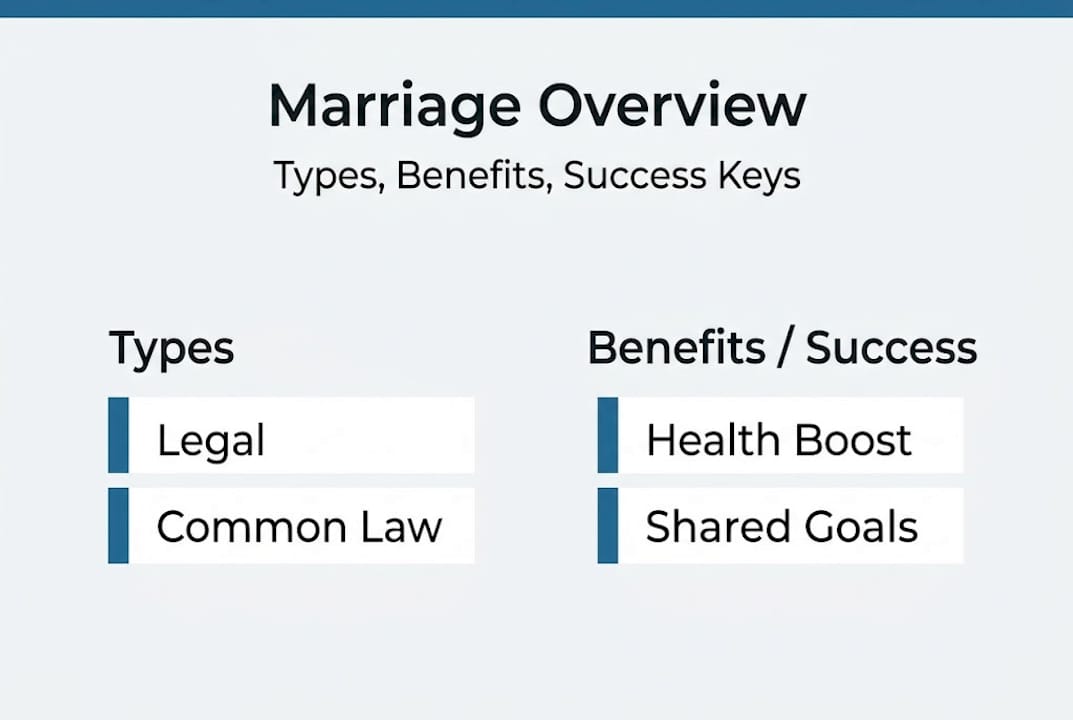
Personality plays a role. Couples where both partners score low on neuroticism (a tendency toward emotional instability and anxiety) and high on conscientiousness (reliability, self-discipline, and follow-through) tend to have more stable marriages. You cannot completely rewire your personality, but you can build habits that reflect these traits.
One of the most well-known findings in relationship research is the 5:1 ratio. For every one negative interaction in a marriage, couples need at least five positive ones to maintain emotional balance. That does not mean avoiding conflict. It means building enough warmth, humor, and affection that conflict does not define the relationship.
Statistic spotlight: Premarital counseling reduces the risk of divorce by approximately 31%, making it one of the most cost-effective investments a couple can make before walking down the aisle.
Additionally, 33% of ever-married Americans have divorced their first marriage, but the overall divorce rate has actually declined to 14.4 per 1,000 married women in 2023. That trend suggests couples today are making more intentional choices about when and whom they marry.
Evidence-based strategies for a stronger marriage:
Pursue premarital counseling before the wedding, not just after problems arise
Practice the 5:1 ratio by actively creating positive moments daily
Engage in shared activities that both partners genuinely enjoy
Address conflict with curiosity rather than defensiveness
Revisit your relationship goals together at least once a year
Additional habits that support long-term success:
Maintain individual friendships and interests outside the marriage
Prioritize physical affection even during stressful periods
Seek professional support early, not as a last resort
Practice self-care and marriage as complementary, not competing, priorities
What most marriage guides miss: A broader view for modern couples
Most marriage advice focuses on communication tips and date nights. Useful, yes. But incomplete. What often gets overlooked is how deeply gender dynamics, cultural expectations, and evolving definitions of marriage shape what a “successful” marriage even looks like.
The reality is that marriage benefits men more than women on average, and that gap is not just a statistic. It reflects decades of unequal emotional labor, domestic burden, and social pressure placed on women within marriage. Ignoring this does not make marriages stronger. Acknowledging it does.
At Life So Well, we believe marriage is best understood not as a rigid institution with a fixed definition, but as an adaptable partnership that evolves with the people inside it. The couples who thrive long-term are not the ones who follow a perfect script. They are the ones who keep renegotiating the terms with honesty and care.
This is especially relevant as marriage continues shifting away from economic necessity toward emotional and personal fulfillment. That shift raises the bar. It means both partners need to be genuinely invested, not just legally bound. Understanding the relationship stress and well-being connection can help couples recognize when the relationship needs attention before it reaches a breaking point.
Rethink marriage not as something you complete, but as something you keep choosing.
Explore relationship wellness with Life So Well
If this guide has sparked questions about your own relationship or your readiness for marriage, you are in the right place. Life So Well is built for exactly this kind of reflection. Our platform offers practical, research-informed resources on mental health, emotional resilience, and relationship wellness to help you build a life that feels genuinely fulfilling.

Whether you are preparing for marriage, working through challenges, or simply wanting to show up better for your partner, our relationship-strengthening tips give you concrete, compassionate guidance rooted in real evidence. Marriage is a journey worth investing in, and Life So Well is here to support every step of that path with clarity and encouragement.
Frequently asked questions
What are the main legal requirements for marriage in the United States?
Most states require a marriage license, proof of legal age, and sometimes a waiting period before the ceremony. However, 8 to 10 states also recognize common law marriages based on cohabitation, mutual intent, and public representation as a couple.
How does premarital counseling impact divorce risk?
Premarital counseling reduces the risk of divorce by about 31%, giving couples a structured space to build communication skills and align on expectations before challenges arise.
Is polygamy legal in the United States?
No. Polygamous arrangements are not legally recognized anywhere in the US, regardless of the participants’ personal beliefs or agreements.
Does marriage impact health and happiness?
Yes, though unevenly. Marriage benefits health and happiness more for men on average, while women often carry a greater share of emotional and domestic labor. Relationship quality ultimately determines the health impact for both partners.
What makes a marriage successful according to research?
Key factors include low neuroticism, high conscientiousness, maintaining a 5:1 positive-to-negative interaction ratio, engaging in shared activities, and keeping communication open and honest.
Recommended


Comments