
Understanding toxic positivity: signs, risks, and healthier alternatives
- teamlifesowell
- 11 minutes ago
- 8 min read

TL;DR:
Toxic positivity dismisses genuine negative emotions, causing emotional suppression and disconnection.
Supporting others with validation and empathy fosters resilience and authentic emotional health.
Embracing all feelings builds inner strength and promotes healthier relationships and self-care.
Positivity feels like a virtue. We’re told to smile through hardship, look on the bright side, and keep our chins up. But what happens when that push toward constant cheerfulness actually makes things worse? Toxic positivity is the denial or rejection of negative emotions in favor of maintaining a constant positive outlook, often dismissing genuine feelings like sadness, anger, or stress. It’s a pattern that shows up in families, workplaces, and social media feeds every single day. Understanding where genuine encouragement ends and toxic positivity begins can be the difference between real emotional support and unintentional harm.
Table of Contents
Key Takeaways
Point | Details |
Recognize toxic positivity | Dismissing negative feelings with forced optimism may harm emotional health. |
Understand the risks | Ignoring difficult emotions can increase stress and damage relationships. |
Choose empathy instead | Validating feelings is healthier than always insisting on positivity. |
Emotional balance builds resilience | Accepting all emotions helps you become stronger and more adaptable. |
What is toxic positivity?
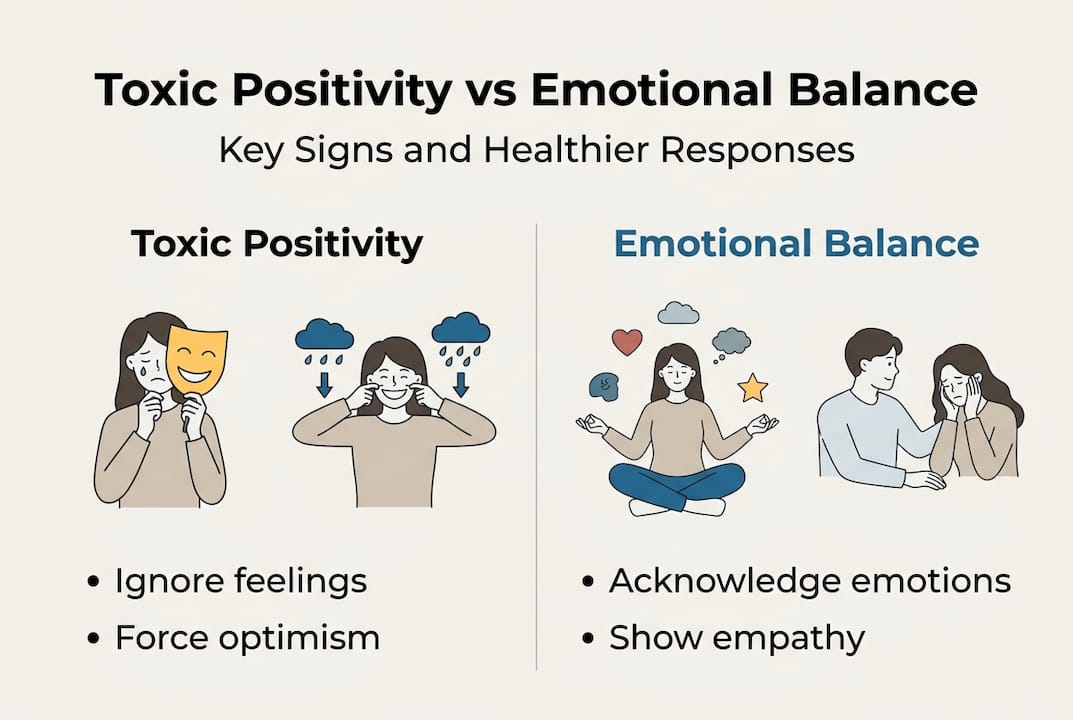
Toxic positivity isn’t about being too happy. It’s about using positivity as a tool to silence or avoid difficult emotions, either in yourself or in others. When someone shares that they’re grieving a job loss and you respond with “Everything happens for a reason,” you’re not offering comfort. You’re redirecting them away from feelings they actually need to process.
The academic view of toxic positivity frames it as a social phenomenon where the pressure to remain positive overrides authentic emotional expression. This is fundamentally different from healthy optimism, which acknowledges difficulty while still holding hope for improvement. Optimism says, “This is hard, and I believe things can get better.” Toxic positivity says, “Stop focusing on the hard part.”
The distinction matters because one approach validates your experience while the other erases it.
Common phrases that signal toxic positivity include:
“Just stay positive!”
“Good vibes only”
“It could be worse”
“Everything happens for a reason”
“At least you have your health”
“You should be grateful”
“Don’t be so negative”
As research confirms, phrases like “Look on the bright side,” “Good vibes only,” and “It could be worse” are among the most common signals of toxic positivity in everyday conversation.
“Toxic positivity invalidates your emotional experience. It tells you that what you’re feeling isn’t acceptable, which creates shame on top of pain.”
Imagine telling a friend you’re exhausted and overwhelmed, and they respond with “You just need to think more positively!” That response doesn’t help you feel understood. It makes you feel like your struggle is a personal failure. That’s the quiet damage toxic positivity does, one dismissed feeling at a time.
How toxic positivity affects emotional health
The emotional cost of toxic positivity is real and measurable. When you’re consistently told that negative emotions are unwelcome, you don’t stop having them. You just start hiding them. Over time, that suppression creates a vicious cycle of shame, stress, and emotional disconnection.
Suppressing emotions doesn’t make them disappear. Research in psychology shows that emotional suppression actually increases physiological stress responses. Your body carries the weight of what your mind refuses to acknowledge. This ripple effect can contribute to anxiety, depression, and even physical symptoms like fatigue and tension.

In workplaces, the damage runs even deeper. Toxic positivity erodes psychological safety, the shared belief that it’s safe to speak up, ask questions, or admit mistakes without fear of judgment. When leaders respond to concerns with “Let’s keep it positive!” or “Focus on solutions, not problems,” employees learn quickly that honesty isn’t welcome. This leads to disengagement, hidden resentment, and emotional burnout that quietly drains team performance.
In relationships, toxic positivity breaks trust. When a friend or partner dismisses your feelings repeatedly, you stop sharing. The relationship becomes surface-level, because depth requires the safety to be honest.
Approach | Short-term effect | Long-term effect |
Toxic positivity | Temporary discomfort relief | Emotional suppression, shame, isolation |
Validation and empathy | Initial emotional intensity | Stronger trust, resilience, real healing |
Avoidance | Reduced conflict | Unresolved issues, distance, resentment |
Honest support | Vulnerability and openness | Deeper connection, psychological safety |
The expert insights on effects are consistent: dismissing emotions doesn’t protect people from pain. It amplifies it.
Here’s what emotional suppression driven by toxic positivity can look like in practice:
Feeling ashamed for being sad or anxious
Pretending to be fine to avoid judgment
Avoiding conversations about real struggles
Feeling isolated even when surrounded by people
Experiencing a sense that your emotions are “too much”
When you explore understanding emotions more deeply, you start to see that every feeling, even the uncomfortable ones, carries important information. Cutting that signal off doesn’t make the underlying issue go away.
Recognizing toxic positivity in everyday life
Spotting toxic positivity in real time takes practice, because it often comes wrapped in good intentions. Someone who says “Just be grateful!” usually isn’t trying to hurt you. They’re uncomfortable with pain and are reaching for the easiest exit from an emotionally charged moment.
Common scenarios where toxic positivity shows up:
Families: A teenager shares anxiety about school and a parent responds, “You have nothing to worry about, just be positive.” The teen learns that their worries aren’t valid at home.
Workplaces: An employee raises a concern about workload and a manager says, “Let’s focus on what’s going well.” The concern goes unaddressed and the employee feels invisible.
Social media: Feeds filled with “Choose happiness” quotes and “No bad days” aesthetics create an unspoken standard that real life rarely meets, leaving people feeling like failures for having normal human emotions.
Common phrases like “Look on the bright side,” “Good vibes only,” and “It could be worse” are red flags worth noticing in your own language and in the language of those around you.
Genuine support | Toxic positivity |
“That sounds really hard. I’m here.” | “Everything happens for a reason.” |
“It makes sense you feel that way.” | “Just think positive!” |
“What do you need right now?” | “At least it’s not worse.” |
“I hear you. This is a lot.” | “Good vibes only!” |
To check yourself for toxic positivity patterns, work through these questions:
When someone shares a problem, is your first instinct to fix their feelings or to hear them out?
Do you feel uncomfortable sitting with someone else’s sadness or frustration?
Do you use positive phrases to end conversations about struggles quickly?
Do you tell yourself to “just be positive” when you’re actually feeling scared or sad?
Do you judge yourself or others for feeling negative emotions?
Pro Tip: Next time someone shares a difficulty, try pausing before you respond. Ask yourself: “Am I about to validate their experience, or redirect them away from it?” That one pause can shift the entire quality of your support.
Building awareness around your own patterns is a key part of mental health self-care. You don’t have to be perfect. You just have to be willing to notice.
Healthier alternatives: How to support emotional balance
The antidote to toxic positivity isn’t pessimism. It’s emotional honesty paired with genuine compassion. You can hold space for difficult feelings without abandoning hope. In fact, that’s exactly what real resilience looks like.
Validating feelings before offering solutions is one of the most powerful shifts you can make in how you support others and yourself. Validation doesn’t mean agreeing with every thought or feeling. It means acknowledging that the feeling is real and understandable given the circumstances.
Here are practical alternatives to common toxic positivity phrases:
Instead of “Just be positive,” try: “I can see this is really hard for you.”
Instead of “It could be worse,” try: “That sounds genuinely painful. I’m sorry.”
Instead of “Everything happens for a reason,” try: “I don’t have the right words, but I’m here.”
Instead of “Good vibes only,” try: “All your feelings are welcome here.”
Instead of “You’ll be fine,” try: “What do you need most right now?”
Empathy is the engine behind these responses. When you listen without rushing to fix, you send a powerful message: your emotions are not a problem to be solved. They’re a part of you that deserves to be seen.
Creating emotionally safe spaces also means applying this same compassion to yourself. Many people are far more toxically positive toward themselves than they realize. Telling yourself to “stop being so sensitive” or “just get over it” is self-directed toxic positivity, and it carries the same emotional cost.
Pro Tip: Practice the phrase “It makes sense I feel this way” when you notice yourself judging your own emotions. This one sentence can interrupt the shame spiral that toxic positivity creates and open the door to genuine self-compassion.
For more strategies on managing the stress that builds when emotions go unacknowledged, explore these stress management tips. And if you want to strengthen your ability to connect with others through difficulty, learning about practicing empathy can be a genuinely transformative step.
Why embracing the full range of emotions makes you resilient
Here’s the counterintuitive truth that most positivity advice misses: the people who are most emotionally resilient aren’t the ones who feel the least pain. They’re the ones who have learned to sit with discomfort without being destroyed by it.
When you suppress difficult emotions, you don’t build strength. You build fragility. Every avoided feeling is a crack in the foundation. Real resilience comes from processing emotions fully, which means letting yourself feel grief, frustration, fear, and disappointment without labeling those feelings as failures.
Most “stay positive” advice is well-meaning but incomplete. It treats negative emotions as obstacles to happiness rather than as data points that guide you toward what matters. Anger tells you a boundary has been crossed. Sadness tells you something meaningful has been lost. Anxiety tells you something needs your attention. These signals are valuable.
Emotional honesty isn’t weakness. It’s the foundation of authentic growth. When you stop performing positivity and start practicing genuine self-awareness, you build the kind of inner stability that no amount of forced cheerfulness can create. Explore self-care for mental health to build that foundation intentionally.
Find more tools for emotional health
Understanding toxic positivity is a meaningful first step, but building lasting emotional balance takes ongoing practice and the right resources.

At Life So Well, we believe emotional well-being grows when you have access to honest, practical guidance that meets you where you are. Whether you’re learning to validate your own feelings, support someone you care about, or simply build a more resilient mindset, there’s a wealth of resources waiting for you. Visit our explore emotions resources section to find articles, tools, and insights designed to help you navigate the full spectrum of human emotion with confidence and compassion. Your emotional health deserves more than a “good vibes only” approach.
Frequently asked questions
What is toxic positivity in simple terms?
Toxic positivity is the denial or rejection of negative emotions in favor of maintaining a constant positive outlook. It means ignoring or dismissing real feelings and insisting on always being positive, even when that’s not realistic or helpful.
How can I tell if I’m being toxically positive?
If you find yourself avoiding conversations about problems or reaching for phrases like “just be positive” when others share struggles, you may be practicing toxic positivity. Phrases like “Look on the bright side,” “Good vibes only,” and “It could be worse” are common signals worth watching for.
Is it possible to be positive without being toxic?
Absolutely. Genuine positivity allows space for all feelings and supports others without denying their real emotional experience. The key difference is that healthy optimism acknowledges difficulty rather than dismissing it.
What are better things to say instead of toxic positivity phrases?
Try “I’m here for you” or “It’s okay to feel upset” to show real support. Validating feelings before offering solutions is one of the most effective ways to replace toxic positivity with genuine, empathetic connection.
Recommended

Comments