
How to tell someone you like them: 5 confident steps
Updated: Apr 5

Telling someone you like them can feel like standing at the edge of a diving board, heart pounding, unsure whether to jump. That hesitation is completely normal. Most people struggle to find the right words, the right moment, or even the right reason to speak up. But staying silent has its own cost. Unexpressed feelings can quietly build into regret, anxiety, or missed connections. This guide walks you through every stage of the process, from understanding your own emotions to handling whatever response comes your way, so you can move forward with clarity and confidence.
Table of Contents
Key Takeaways
Point | Details |
Honesty drives outcomes | Sincere expression of feelings leads to stronger and more satisfying relationships. |
Self-esteem is crucial | Confidence and self-worth predict higher success and resilience when expressing affection. |
Preparation matters | Thinking through your feelings and planning your approach improves your communication. |
Responses can vary | Being prepared for different outcomes helps you handle both acceptance and rejection gracefully. |
Personal growth continues | Whatever the result, expressing yourself is an important step in emotional development. |
Assessing your feelings and motivations
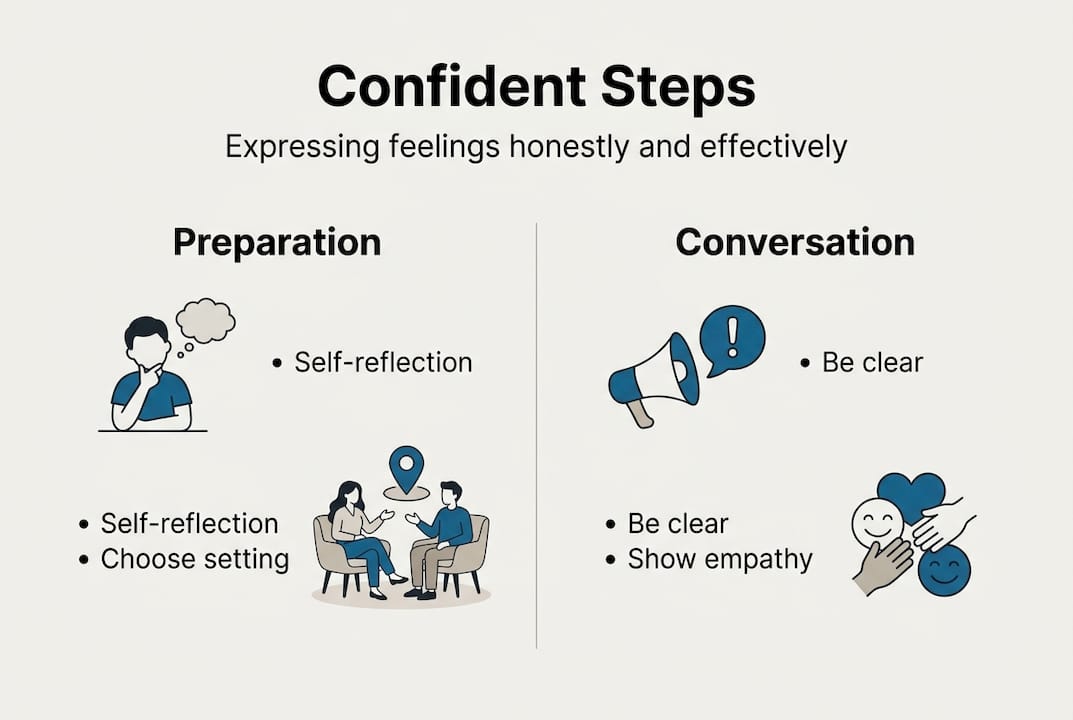
Before you say a single word to the other person, take a moment to look inward. Self-reflection is not just a nice idea here. It is the foundation of everything that follows. When you understand why you want to share your feelings, you communicate with far more intention and far less anxiety.
Start by asking yourself some honest questions. Are you drawn to this person because of genuine connection, or is it loneliness, habit, or the thrill of a challenge? There is no judgment in asking. The goal is clarity. Exploring relationship topics can help you recognize patterns in how you connect with others, which makes your motivations easier to identify.
Here are some questions worth sitting with before you have the conversation:
What specifically do I appreciate about this person?
Am I prepared for any outcome, including a no?
Do I want a relationship, or am I seeking validation?
How will I feel about myself after speaking up, regardless of their response?
Your answers reveal a lot. They also point to something research confirms: high self-esteem predicts higher perceived success when asking someone out, based on studies with 490 participants. In other words, how you feel about yourself shapes how you experience the entire interaction, win or lose.
This is where emotional stability becomes a real asset. When you feel grounded in your own worth, rejection does not feel like a verdict on your value as a person. It simply becomes information.
Pro Tip: Spend five minutes journaling your motivations and what you hope will happen. Write down both the best and worst case scenarios. This simple exercise reduces anxiety and helps you walk into the conversation feeling prepared rather than reactive.
Preparing for the conversation
Once you know what you feel and why, the next step is practical preparation. This is where many people either over-prepare or skip preparation entirely. Both extremes tend to backfire.
Choosing the right setting matters more than most people realize. A quiet, private environment puts both of you at ease. A crowded restaurant or a group hangout creates pressure and distraction. Timing matters too. Avoid bringing up your feelings when either of you is stressed, rushed, or emotionally drained. Good emotional balance tips can help you recognize when you are in the right headspace to have a meaningful conversation.

Consider the two main approaches:
Approach | Strengths | Potential challenges |
Direct (spoken, in person) | Authentic, immediate, allows real dialogue | Can feel nerve-wracking, harder to control pacing |
Indirect (text, letter, note) | Lower pressure, time to choose words carefully | Can feel less personal, tone may be misread |
Neither approach is universally better. Emotional guidance suggests that the method matching your personality and the nature of your relationship tends to work best. If you are naturally expressive in person, go direct. If you communicate better in writing, a heartfelt message is completely valid.
Here are a few things to prepare before the conversation:
Write down two or three key things you want to say
Decide on your opening line so you do not freeze up
Plan where and when you will have the conversation
Remind yourself that honesty and self-esteem correlate with better relational outcomes, even when the outcome is uncertain
Pro Tip: Practice out loud, either with a trusted friend or in front of a mirror. Hearing your own words reduces the shock of saying them for real and helps you adjust your tone before the moment arrives.
Expressing your feelings effectively
You have done the inner work. You have prepared. Now comes the part that actually matters: saying it out loud.
Follow these steps to express yourself with honesty and care:
Start with a calm opener. Something simple like “I wanted to share something with you” signals that this is a meaningful conversation without creating alarm.
Be specific about your feelings. Instead of vague statements, say something like “I really enjoy spending time with you and I have developed feelings for you.” Specificity feels more genuine than grand declarations.
Keep it about you, not them. Use “I feel” statements rather than “You make me feel.” This keeps the conversation from feeling like pressure.
Give them space to respond. After you speak, stop talking. Silence can feel uncomfortable, but it gives the other person room to process and respond authentically.
Stay present and open. Whatever they say, listen without interrupting. Your vocal expression and body language communicate as much as your words do.
Research backs up the power of this kind of openness. As one study found:
“Expressed and perceived honesty in discussions benefits relationship satisfaction and motivation to change, even without accuracy” (N=428).
This is a striking finding. You do not need to say everything perfectly. You just need to be honest. That honesty, on its own, creates a positive ripple in the relationship regardless of the outcome.
Practicing empathy techniques before and during the conversation also helps. When you approach the moment with genuine curiosity about how the other person feels, rather than just anxiety about how you come across, the whole dynamic shifts. You become a participant in a real exchange, not a performer waiting to be judged.
Handling responses and next steps
The conversation happened. Now what? How you handle the response, whether it is a yes, a maybe, or a no, shapes your emotional well-being and the future of the relationship.
Here is a quick overview of common responses and how to navigate them:
Response | What it might mean | Suggested next step |
Enthusiastic yes | Mutual interest and readiness | Make a plan together, keep communication open |
Hesitant or uncertain | They need time to process | Give space, avoid pushing for a quick answer |
Kind no | They do not share the feelings | Thank them for honesty, take time to process |
Avoidance or silence | Discomfort or uncertainty | Respect the boundary, focus on your own healing |
If the response is positive, enjoy it. But also stay grounded. Early excitement can cloud judgment, so keep building the connection steadily rather than rushing into expectations.
If the response is a no, here is what helps:
Allow yourself to feel disappointed without spiraling into self-criticism
Avoid replaying the conversation obsessively looking for what went wrong
Lean on supportive friends or journaling to process the emotion
Recognize that honesty increases motivation to grow and improves relationship satisfaction over time, even when the immediate answer is not what you hoped for
Rejection can feel like a vicious cycle if you let it chip away at your self-worth. Understanding relationship stress and its effects on mental health can help you contextualize what you are feeling without catastrophizing. And mindfulness after rejection is genuinely effective at restoring emotional balance faster than distraction or avoidance.
Pro Tip: After any emotionally charged conversation, give yourself at least 24 hours before making any decisions about the relationship or your next steps. Emotions are loudest right after the moment. Let them settle before you act.
A fresh perspective: Why honesty and self-worth matter more than perfect timing
Most advice about expressing romantic feelings focuses on technique: what to say, when to say it, how to phrase it just right. And while preparation matters, this focus on technique can actually become a trap. You keep waiting for the perfect moment, the perfect words, the perfect version of yourself. That moment never comes.
Here is what the research actually shows: honesty and self-esteem are stronger predictors of positive relational outcomes than timing or technique. When you speak from a place of genuine self-worth, the conversation lands differently. It carries weight. It invites real connection rather than a scripted exchange.
“The courage to be honest is often more impactful than perfect technique.”
This reframe matters because it shifts the focus from performance to growth. Instead of asking “Did I say it right?” you start asking “Did I show up honestly?” That is a question you can always answer yes to, regardless of the outcome.
Building your emotional intelligence alongside your communication skills creates a compounding effect. Each honest conversation, whether it goes well or not, makes the next one easier. You are not just trying to win someone over. You are becoming someone who communicates with integrity.
Pro Tip: Invest in self-awareness as consistently as you invest in communication skills. The two grow best together.
Frequently asked questions
What should I say when telling someone I like them?
Be honest, clear, and direct. Express your feelings simply and respectfully, focusing on authenticity rather than rehearsed lines, since expressed honesty benefits relationship satisfaction even when the words are not perfectly chosen.
How do I overcome the fear of rejection?
Focus on your self-worth and prepare emotionally before the conversation. Practicing mindfulness and positive self-talk builds resilience, and high self-esteem is directly linked to feeling more confident when expressing romantic interest.
What if the person does not feel the same way?
Respect their feelings and honor your own honesty. Use the experience as an opportunity to grow emotionally, since honesty and self-esteem correlate with better relational outcomes over time, even when the immediate response is not what you hoped.
Should I wait for the perfect moment or act sooner?
Perfect timing is far less important than genuine communication. Moving forward honestly tends to lead to better outcomes, as honesty increases relationship satisfaction and motivation to grow regardless of the result.
Recommended
This article is only for information and does not offer medical or other expert advice. If you need medical or other expert advice, please consult doctors and certified experts.


Comments