
How to be less shy: proven strategies to boost confidence

You walk into a room full of people and instantly feel your heart race. Your palms sweat, your mind goes blank, and you find yourself clinging to the nearest wall or your phone. Shyness can steal opportunities for connection, career growth, and genuine happiness. The good news? You can learn to be less shy using evidence-based techniques that thousands have used to transform their social lives. This guide walks you through practical, research-backed strategies to build lasting confidence and ease in social situations.
Table of Contents
Key Takeaways
Point | Details |
CBT reduces shyness | Cognitive Behavioral Therapy provides evidence based, structured strategies to reduce shyness and social anxiety. |
Start small exposures | Begin with easy social tasks and gradually work up to more challenging situations until anxiety falls significantly. |
Internet based CBT works | Online CBT programs offer effective treatment options that fit into busy schedules and increase access. |
Know when to seek help | If panic attacks, complete avoidance, depression, substance use, or thoughts of self harm occur, seek professional support. |
Understanding shyness and preparing to change
Shyness is a common emotional response characterized by discomfort, self-consciousness, and nervousness in social situations. It exists on a spectrum from mild hesitation to severe avoidance. While shyness itself isn’t a disorder, it can significantly impact quality of life and sometimes indicates a more serious condition. Social anxiety disorder differs from everyday shyness in severity and impairment level. SAD involves intense, persistent fear that disrupts work, relationships, and daily functioning.
Before diving into change strategies, assess your current situation honestly. Ask yourself: Does my shyness prevent me from pursuing opportunities? Do I avoid social situations that matter to me? Does anxiety about social interaction consume significant mental energy? If you answered yes to these questions, you’re ready to commit to change. Setting realistic goals is essential. You won’t transform into an extrovert overnight, and that’s not the goal. Instead, aim to reduce discomfort gradually and expand your social comfort zone.
Preparing mentally involves accepting your feelings without judgment. Shyness doesn’t make you defective or weak. It’s a learned response that can be unlearned with practice and patience. Building motivation requires connecting change to what matters most to you. Maybe you want deeper friendships, career advancement, or simply to feel more at ease in your own skin. Write down your personal reasons for wanting to be less shy. This list becomes your anchor when progress feels slow.
Recognize warning signs that professional help may be necessary:
Panic attacks or intense physical symptoms in social situations
Complete avoidance of necessary social interactions like work meetings or family gatherings
Depression or substance use related to social fears
Thoughts of self-harm or hopelessness
If these apply to you, consider exploring mind wellness resources and consulting a mental health professional. For most people experiencing manageable shyness, the strategies in this guide offer a solid starting point.
Step-by-step guide to overcoming shyness with cognitive behavioral techniques
Cognitive Behavioral Therapy represents the gold standard for treating shyness and social anxiety. CBT produces large improvements through various delivery methods including face-to-face sessions, group therapy, and internet-based programs. The core principle is simple: gradually facing feared situations while learning to manage anxious thoughts reduces avoidance and builds genuine confidence.
The exposure hierarchy forms the foundation of effective CBT for shyness. This personalized ladder ranks social situations from least to most anxiety-provoking. Your hierarchy might look like this:
Making eye contact with a cashier
Asking a store employee for help
Making small talk with a neighbor
Attending a small gathering with familiar people
Introducing yourself to someone new at an event
Speaking up in a meeting
Giving a presentation to a group
Attending a party where you know few people
Start at the bottom rung. Practice the easiest scenario repeatedly until your anxiety drops by at least half. This might take several attempts over days or weeks. The key is staying in the situation long enough for your nervous system to realize no actual danger exists. Leaving too quickly reinforces the false belief that the situation is threatening.
As you master each level, move up gradually. Don’t skip steps or rush the process. Your brain needs time to rewire its threat response. Track your progress in a journal, noting anxiety levels before, during, and after each exposure. This data shows concrete improvement even when it doesn’t feel obvious.
Pro Tip: Before each exposure, spend two minutes doing slow belly breathing. Inhale for four counts, hold for four, exhale for six. This activates your parasympathetic nervous system and reduces physical anxiety symptoms.
CBT Delivery Method | Effectiveness | Accessibility | Cost | Time Commitment |
Face-to-face therapy | High | Moderate | High | 12-16 weekly sessions |
Group CBT | High | Moderate | Moderate | 8-12 weekly sessions |
Guided internet CBT | High | High | Low to moderate | Self-paced, 8-12 weeks |
Self-help CBT | Moderate | High | Low | Self-paced, variable |
Research shows guided approaches outperform completely self-directed efforts. If professional therapy isn’t accessible, consider structured online programs with therapist support. The combination of expert guidance and flexible scheduling makes internet-based CBT particularly valuable for people whose shyness makes in-person appointments challenging. This approach supports building social relationships while respecting your current comfort level.
Supporting daily habits to reduce shyness and maintain progress
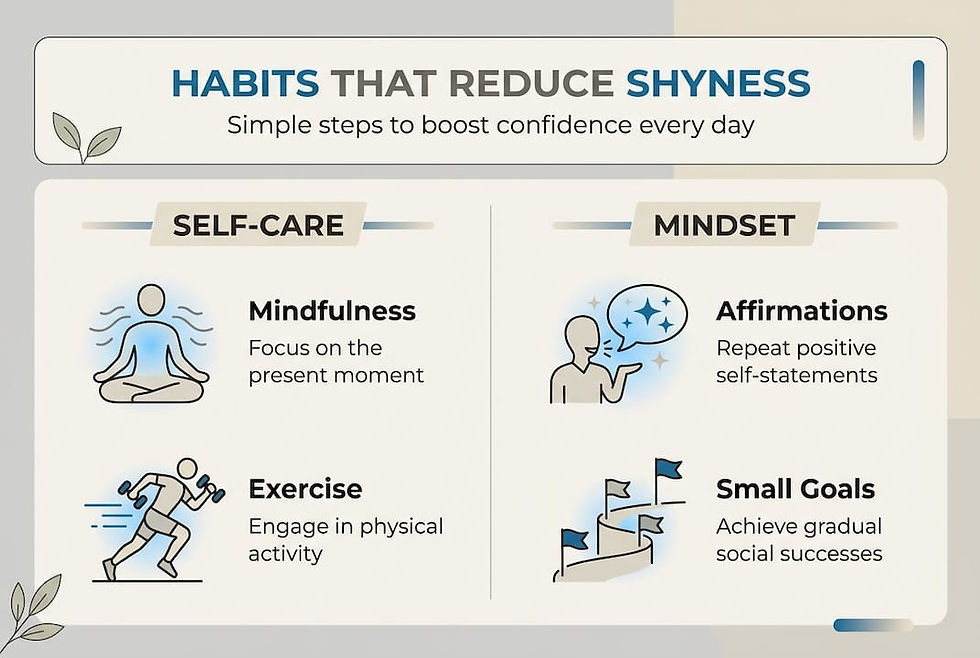
Behavioral techniques work best when supported by daily practices that enhance overall mental well-being. These habits don’t replace exposure work but amplify its effects and help maintain progress long-term. Daily habits like mindfulness create a foundation of emotional stability that makes social challenges feel more manageable.

Mindfulness meditation trains your brain to stay present rather than catastrophizing about social situations. When you catch yourself replaying embarrassing moments or rehearsing future conversations, mindfulness brings you back to now. Start with five minutes daily. Sit comfortably, focus on your breath, and gently redirect attention when your mind wanders. This simple practice reduces the rumination that fuels shyness. The mental clarity benefits of silence extend beyond meditation, helping you process social experiences more effectively.
Positive affirmations reshape the negative self-talk that maintains shyness. Instead of “I’m so awkward” or “Everyone thinks I’m weird,” practice statements like “I’m learning to feel comfortable in social situations” or “My worth isn’t determined by others’ opinions.” These aren’t empty platitudes. Repeated affirmations create new neural pathways that compete with automatic negative thoughts. Write three personalized affirmations and say them aloud each morning.
Physical exercise directly reduces anxiety symptoms by regulating stress hormones and boosting mood-enhancing neurotransmitters. You don’t need intense workouts. A 20-minute walk, gentle yoga, or dancing to favorite songs provides significant benefits. Regular movement also improves body confidence, which often underlies social discomfort. Spending time in healing nature combines exercise with the calming effects of natural environments.
Pro Tip: Create a pre-social ritual combining these practices. Before events that trigger shyness, take a short walk while doing mindful breathwork and body awareness, repeat your affirmations, and set an intention to stay present rather than perfect.
Additional supportive habits include:
Limiting caffeine and sugar, which can amplify anxiety symptoms
Maintaining consistent sleep schedules to support emotional regulation
Journaling about social experiences to process emotions and track patterns
Practicing self-compassion when setbacks occur
Celebrating small wins rather than fixating on remaining challenges
These habits work synergistically. Mindfulness makes you more aware of negative self-talk, making affirmations more effective. Exercise reduces baseline anxiety, making exposure practice less overwhelming. Together, they create sustainable change rather than temporary improvements.
Exploring therapy options and when to seek professional help
Understanding your treatment options empowers you to choose the approach that fits your needs, resources, and preferences. The effectiveness of CBT for shyness has been demonstrated across multiple delivery formats, giving you genuine choices rather than a one-size-fits-all solution.
Face-to-face therapy with a licensed therapist offers personalized attention and real-time feedback. Your therapist tailors interventions to your specific challenges and provides accountability. This format works well if you have insurance coverage, can afford out-of-pocket costs, and have access to qualified providers. Sessions typically occur weekly for 12 to 16 weeks, with homework assignments between meetings.
Group CBT brings together people facing similar challenges. This format offers unique benefits: you practice social skills in a supportive environment, learn from others’ experiences, and realize you’re not alone in your struggles. Group therapy costs less than individual sessions while maintaining effectiveness. The social nature of group work provides built-in exposure practice.
Guided self-help and internet-based CBT deliver structured programs with varying levels of professional support. Guided CBT outperforms unguided approaches, making therapist involvement valuable even in remote formats. These programs typically include psychoeducation modules, interactive exercises, exposure planning tools, and progress tracking. Many offer email or messaging support from therapists.
Therapy Format | Best For | Potential Drawbacks | Typical Duration |
Face-to-face individual | Severe symptoms, complex cases | Higher cost, scheduling constraints | 12-16 weeks |
Group therapy | Moderate symptoms, budget-conscious | Less individual attention, set schedule | 8-12 weeks |
Guided internet CBT | Mild to moderate symptoms, flexible schedule | Requires self-motivation, less personal connection | 8-12 weeks |
Unguided self-help | Mild symptoms, highly motivated | Lower completion rates, no expert feedback | Variable |
Consider professional help if you experience:
Significant life impairment from social fears
Symptoms meeting criteria for social anxiety disorder
Previous unsuccessful attempts to change on your own
Co-occurring depression, substance use, or other mental health concerns
Desire for expert guidance and accountability
Internet-based therapy removes common barriers like transportation, scheduling conflicts, and geographic limitations. Research confirms it’s as effective as traditional face-to-face treatment for most people. This accessibility makes professional help available to those who might otherwise go untreated. Strengthening social connections becomes possible even when starting from a place of significant discomfort.
When choosing a therapist or program, verify they specialize in anxiety disorders and use evidence-based approaches. Ask about their experience treating shyness and social anxiety specifically. A good therapeutic relationship matters as much as the techniques used. Don’t hesitate to try different providers until you find the right fit.
Explore life-enhancing resources for your journey
Your journey from shyness to social confidence doesn’t end with this article. Life So Well offers comprehensive wellness resources designed to support every aspect of your well-being. Our mind wellness resources provide deeper dives into cognitive techniques, stress management, and mental clarity practices that complement the strategies you’ve learned here. Explore our emotions management guides for additional tools to navigate the feelings that accompany social challenges. From anxiety management to building emotional resilience, these resources offer practical guidance grounded in research and real-world application. Visit Life So Well to discover articles, tools, and inspiration supporting your ongoing growth. Sustainable change happens through consistent practice and ongoing learning. We’re here to support you every step of the way.
Frequently asked questions
How can I tell if my shyness is more serious social anxiety?
Social anxiety disorder involves intense, persistent fear that significantly impairs your daily functioning. Key indicators include panic attacks in social situations, complete avoidance of necessary interactions like work meetings, and anxiety so severe it affects your job performance or relationships. If your shyness prevents you from living the life you want despite repeated attempts to push through, professional assessment is warranted. A mental health professional can distinguish between manageable shyness and clinical social anxiety disorder requiring specialized treatment.
What are quick daily practices to reduce shyness?
Start with five minutes of mindfulness meditation each morning to build present-moment awareness and reduce rumination. Practice positive affirmations that counter negative self-talk about your social abilities. Use breathwork techniques like box breathing before social situations to calm your nervous system. Consistency matters more than duration. These practices rewire your brain’s response to social situations when done regularly over weeks and months.
Is internet-based therapy effective for overcoming shyness?
Yes, research confirms internet-based CBT is comparable in effectiveness to traditional face-to-face therapy for treating shyness and social anxiety. Guided programs with therapist support produce better outcomes than completely self-directed approaches. The accessibility benefits are significant: you can access treatment regardless of location, schedule sessions around your life, and often pay less than traditional therapy. This format particularly helps people whose shyness makes in-person appointments challenging, allowing you to build confidence before transitioning to face-to-face interactions.
How long does it take to become less shy?
Most people see noticeable improvement within 8 to 12 weeks of consistent practice using CBT techniques and daily supportive habits. However, lasting change unfolds over months, not days. Your timeline depends on shyness severity, consistency of practice, and whether you’re working with professional guidance. Focus on progress rather than perfection. Small wins like making eye contact or initiating brief conversations represent significant achievements. Celebrate these milestones while continuing to challenge yourself with gradually more difficult social situations.
Can I overcome shyness without therapy?
Many people successfully reduce shyness using self-directed strategies like exposure hierarchies, mindfulness practice, and the techniques described in this guide. However, professional guidance significantly improves outcomes and completion rates. If self-help approaches haven’t worked after several months of consistent effort, or if your shyness severely impairs your life, therapy becomes more important. Consider exploring social connection strategies while deciding whether professional support would accelerate your progress. The investment in therapy often pays dividends in faster, more sustainable change.
Recommended
This article is only for information and does not offer medical or other expert advice. If you need medical or other expert advice, please consult doctors and certified experts.


Comments